Ferrari's First EV, the Luce, Ditches the Supercar Playbook Entirely
Ferrari's first fully electric car is a five-seat hatchback designed with Jony Ive's LoveFrom studio, and it changes almost everything about what a Ferrari is supposed to look like.
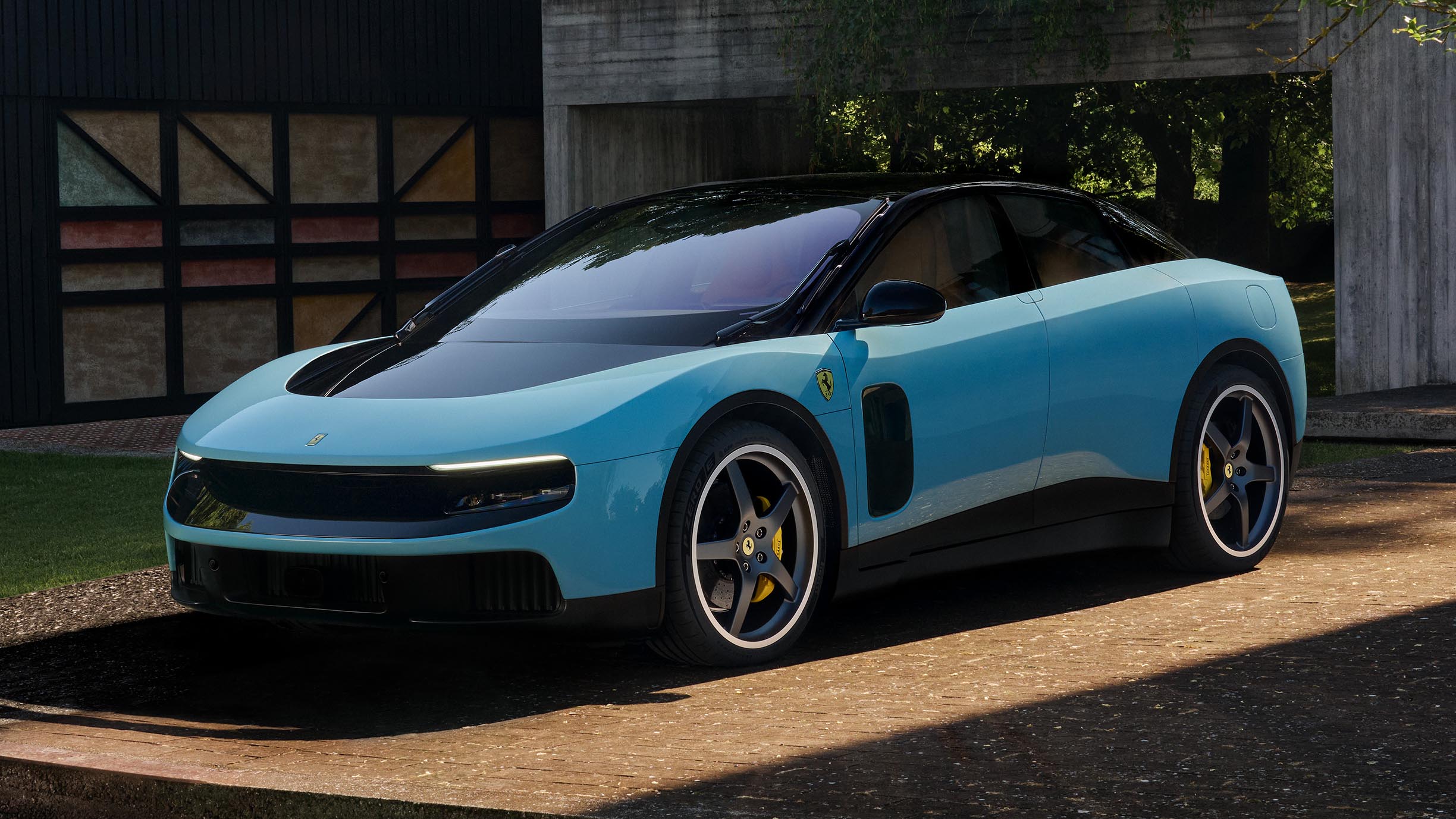
Ferrari has finally shown its first fully electric car, and it isn't the two-seat electric supercar the internet spent three years imagining. The Luce is a five-seat hatchback, designed with Jony Ive's LoveFrom studio, and it changes almost everything about what a Ferrari is supposed to look like.
The wait for this car has been unusually long by Ferrari's own standards. Chairman John Elkann first confirmed an electric Ferrari was coming back in 2022, and the brand spent the years since testing prototypes under heavy camouflage across European mountain passes, feeding a steady stream of speculation about what shape the badge's first EV would eventually take. Most of that speculation assumed a two-door halo car in the mould of the SF90 or 296. The Luce answers that guessing game by ignoring it entirely.
A Five-Seater, Not a Two-Seater
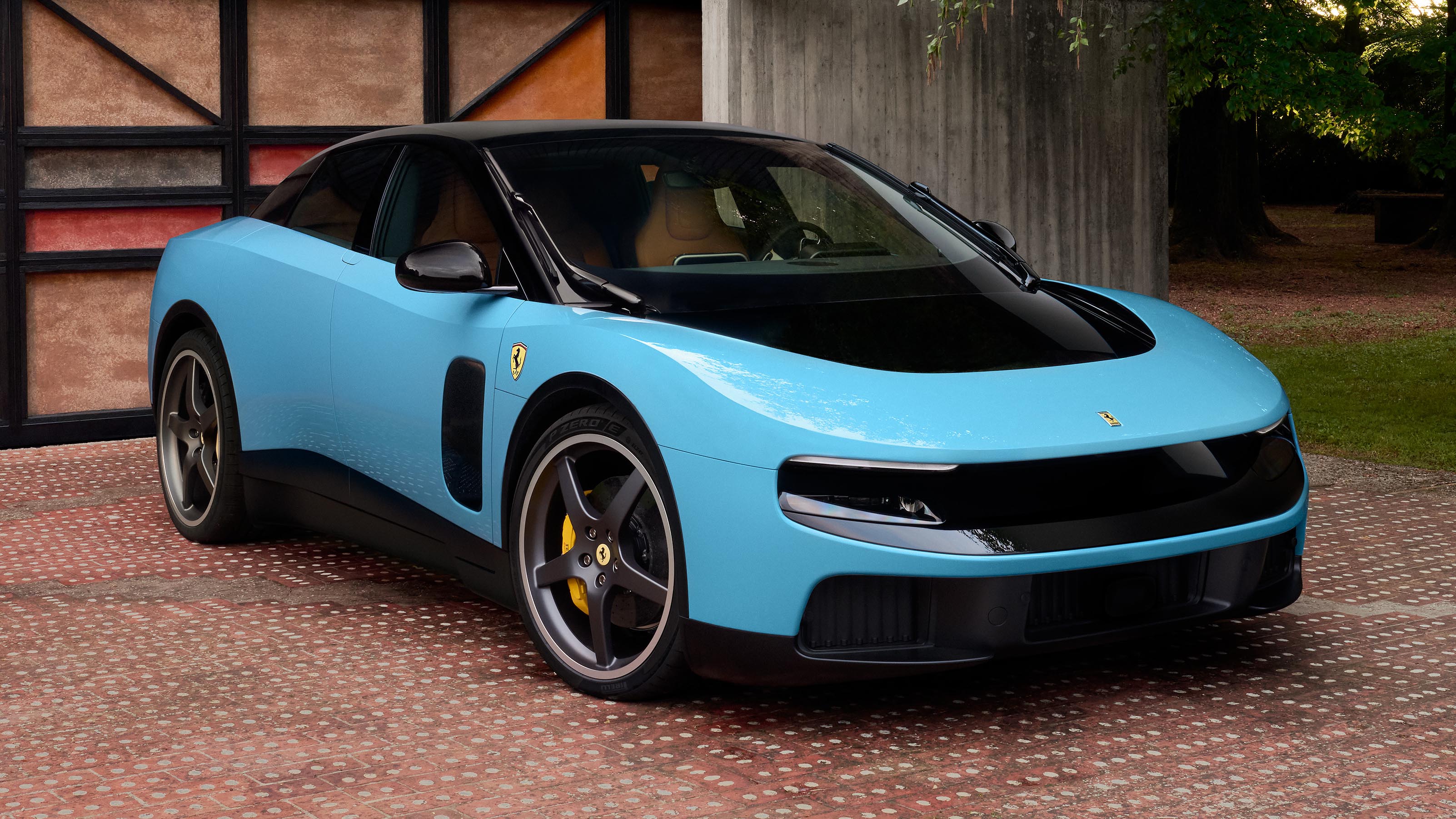
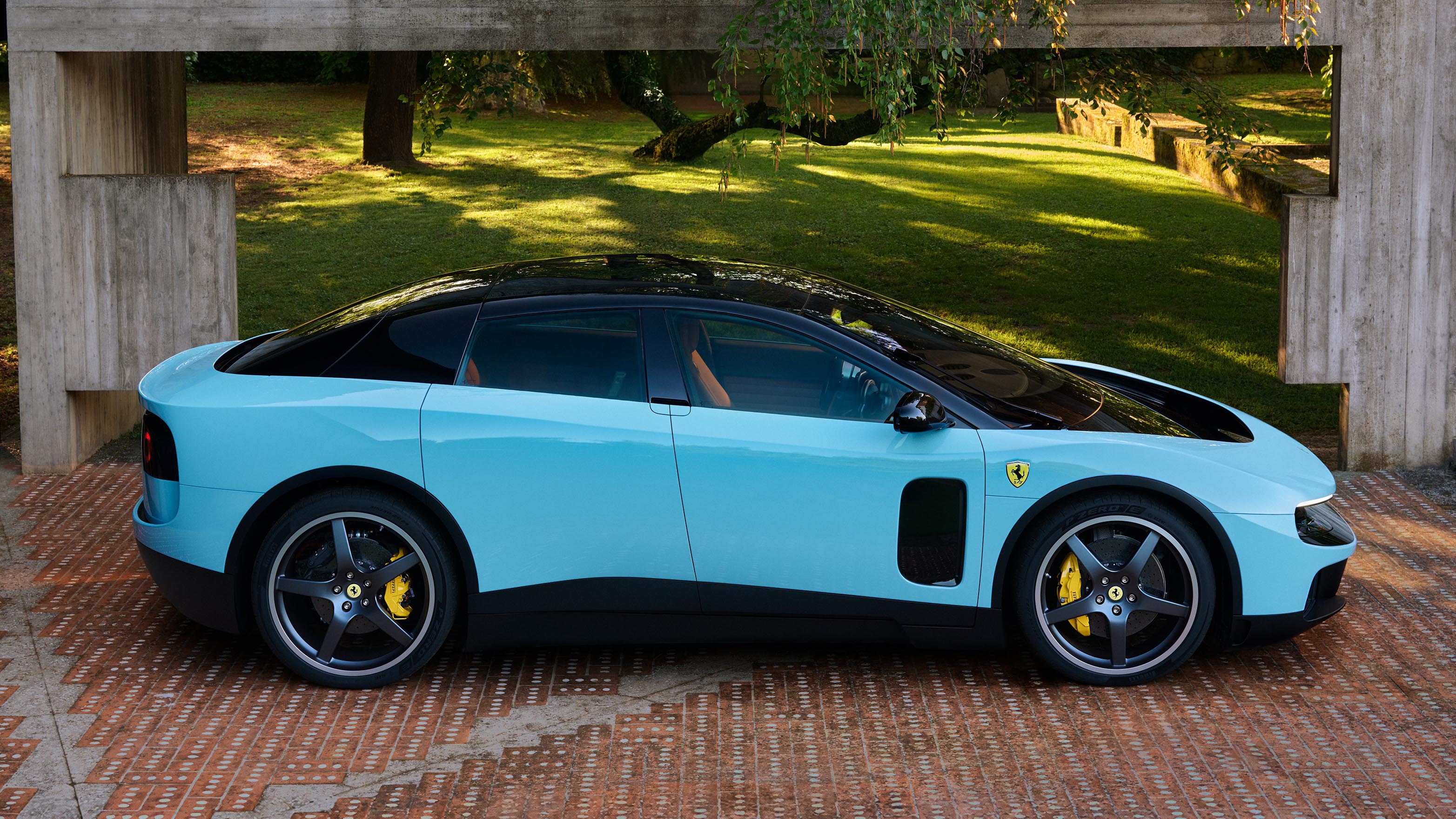
The Luce (Italian for "light") departs from Ferrari's mid-engine tradition entirely. It's a five-seat, five-metre hatchback with rear-hinged doors, a "flying bridge" C-pillar and some of the slimmest LED headlights on any production car, with HVAC vents built directly into the light units. The wipers park at the sides of the windscreen rather than the centre, and the glass flows straight into the bonnet with barely a shutline to be seen.
The Numbers
Spec callout: 1,035 bhp from four independently controlled electric motors (282 bhp front, 831 bhp rear), 0-62mph in 2.5 seconds, a 192mph top speed and roughly 330 miles of range from a 122kWh, 800V battery pack.
Ferrari says it's the slipperiest car it has ever built, though an official drag figure hasn't been confirmed. At 2,260kg it's heavier than any current Ferrari, which is the trade-off that comes with a battery this size. The four-motor setup allows torque vectoring across each wheel individually, something Ferrari has previously only offered in more limited form on cars like the SF90, and the brand claims the system can shuffle power front to rear and side to side quickly enough to mimic the rotation of a rear-wheel-drive car despite the Luce's added weight and all-wheel-drive layout.
An Interior Built Like a Watch
The cabin leans hard into craft rather than screens. A single piece of machined aluminium runs the length of the dashboard with no bend radius, the three-spoke steering wheel is built from 19 CNC-milled recycled aluminium parts, and the instrument cluster mixes OLED displays with a physical speedometer needle. A central glass console was developed with Corning, the same company behind Gorilla Glass on the iPhone, and the cabin runs a 21-speaker, 3,000-watt sound system with Ferrari's own audio software.
Ive's studio reportedly pushed back hard against Ferrari's early instinct to fill the dashboard with screens, arguing that a car meant to carry the badge's first electric powertrain shouldn't feel like a tablet on wheels. The compromise is a cabin where the physical materials, aluminium, leather and glass, do most of the talking, with digital displays kept deliberately small and recessed rather than spread edge to edge as they are in most modern EVs.

Where It Sits Against the Competition
The Luce enters a small but growing field of ultra-luxury electric grand tourers, sitting alongside cars like the Porsche Taycan Turbo GT, the Lotus Eletre and the Rimac Nevera, though its five-seat, five-door body places it closer in concept to a high-performance shooting brake than any of those. Aston Martin and Bentley are both known to be working on their own first EVs, so Ferrari's decision to lead with practicality rather than outright spectacle may prove to be a deliberate hedge, positioning the Luce as a car for existing Ferrari owners who need a daily driver rather than a second sports car.
What It Means for Ferrari
Pricing hasn't been announced, though industry estimates land somewhere between $300,000 and $500,000. What matters more is the statement: Ferrari's first EV isn't a low-volume halo car, it's a full production model aimed at buyers who'd never have considered a mid-engine V8. Whether that's a smart hedge against tightening emissions rules or a genuine shift in what the brand wants to be depends on how the next few years of Ferrari's lineup shake out.
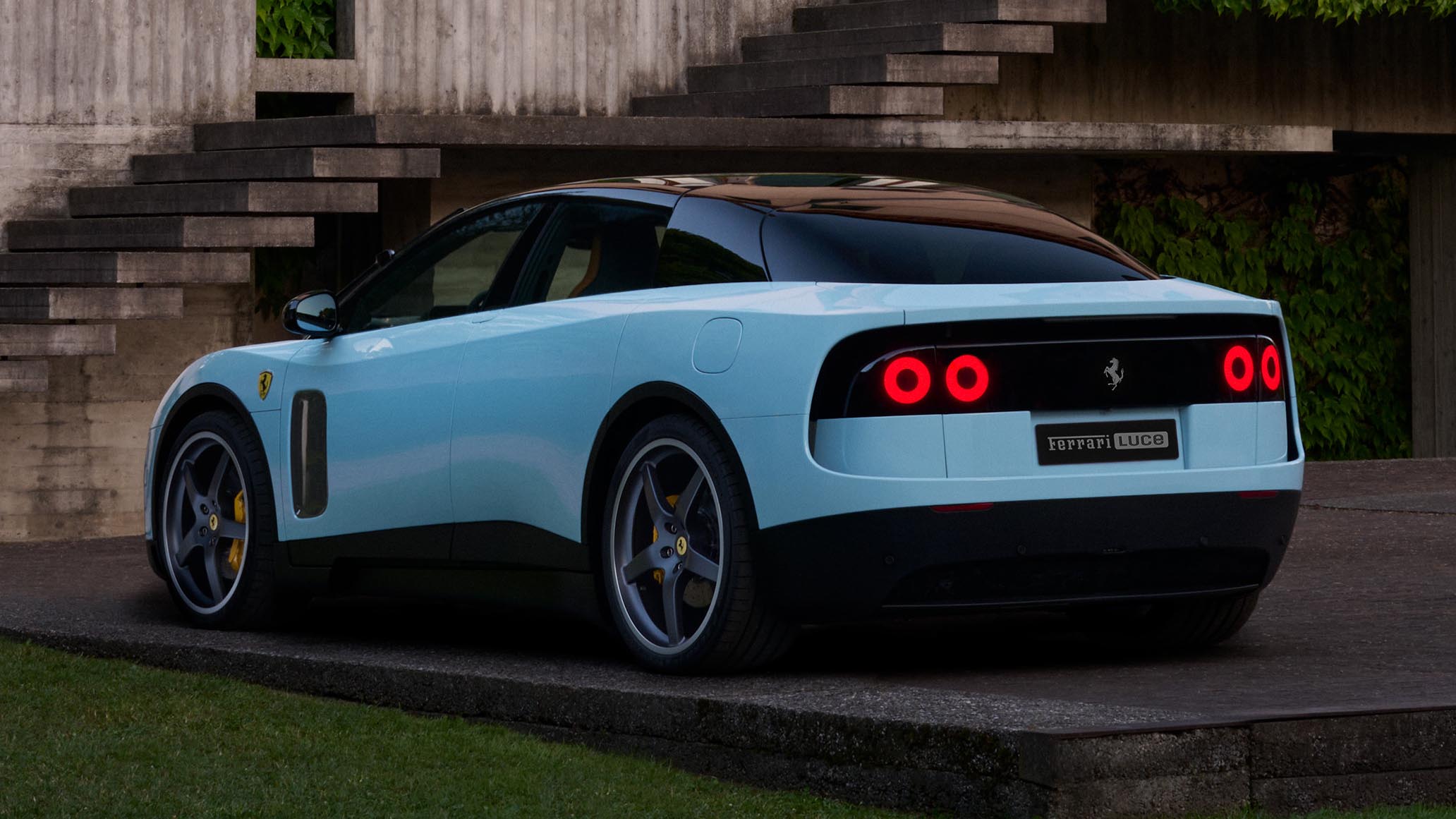
Verdict: A genuinely strange, genuinely serious first attempt. Ferrari didn't play it safe with this one, and that alone makes it worth paying attention to.