Is the Garmin Fenix 9 Worth Upgrading to?
Garmin drops a new flagship and we all get the itch. Once the hype settles, is the Fenix 9 really worth the jump if you already own an earlier one like the Epix Pro?
Garmin announces a new flagship and something in my watch nerd brain lights up. We all do it. Within about four minutes I am on the product page, nodding at the new screen and making excuses for why I need it. That itch is real, and it is very good at making a watch I’m perfectly happy with feel suddenly ancient.
So here is the question that matters once the launch noise dies down: Garmin Fenix 9 vs Fenix 8 vs Fenix 8 Pro vs Epix Pro, worth it? Specifically, is the jump to the new one worth it if you already own one of the earlier flagships?
The Epix Pro owner's dilemma
Let's use the Epix Pro as the worked example, because it is the watch that makes the temptation most interesting and my exact situation. If you already own the Garmin Epix Pro, you have a gorgeous AMOLED screen, about two weeks of battery in ordinary smartwatch use and a watch that does everything most of us ask of it.
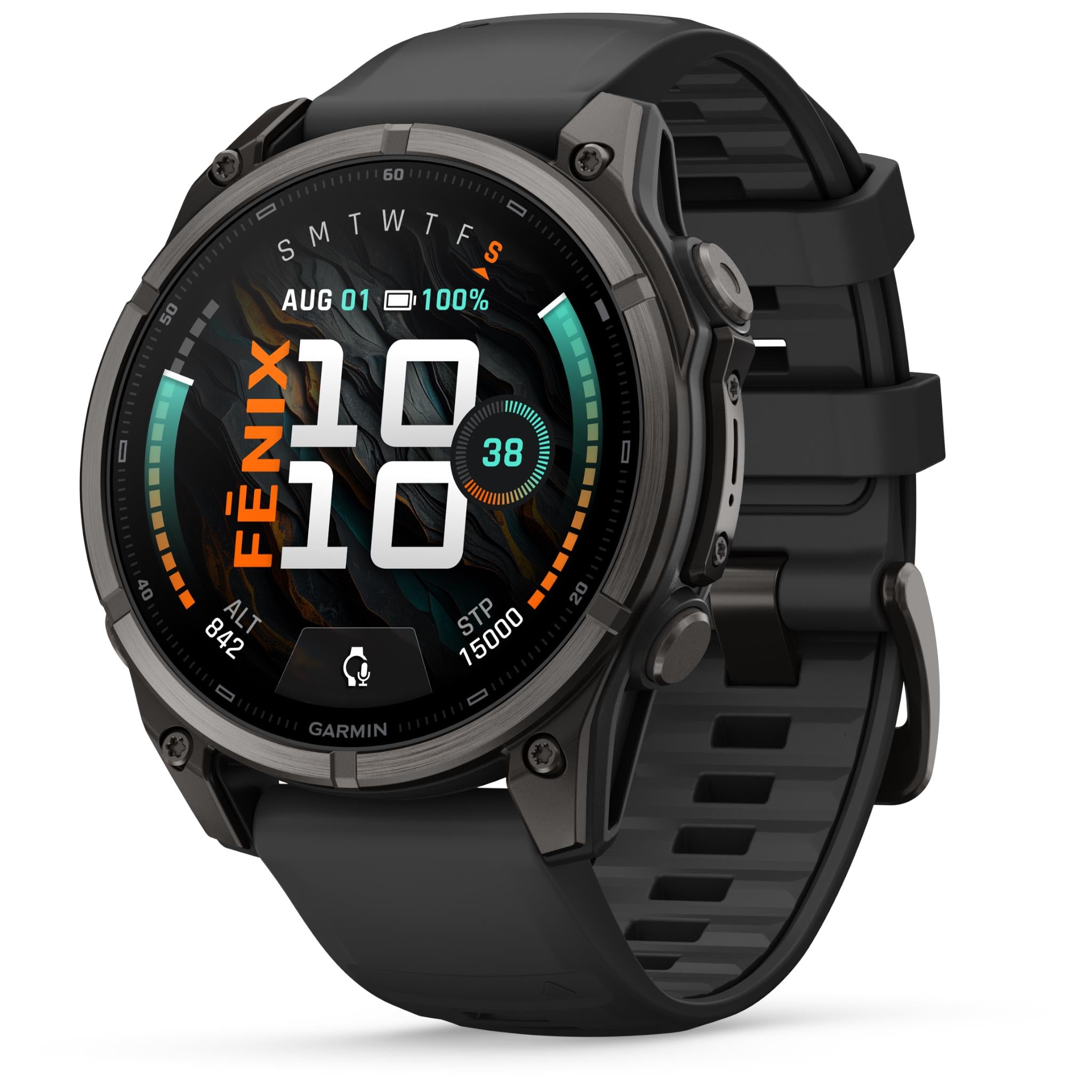
Now look at what the Garmin Fenix 9 actually changes. The screen is the headline: the Fenix 9 AMOLED reaches about 2,000 nits against the Epix Pro's 1,200, so roughly two thirds brighter, which matters most when you are squinting at it in harsh midday sun. Maps are the next one. There is more memory and a reworked map engine, and Garmin says panning around is quicker. Storage doubles to 64GB against the Epix Pro's 32GB, so more maps and more music.
The Fenix 9 Pro also brings satellite and mobile messaging, plus voice messages, which the Epix Pro does not have. They are nice features, but they need a paid plan and coverage where you are, and if you use the watch mostly for fitness tracking they are not deal breakers.
What does not change is the thing most people assume will. On the 47mm size, battery between charges is about the same, roughly two weeks. So you would be paying for a nicer screen and a snappier map, not for a week of extra juice.
My honest read: if your Epix Pro still does everything you want, the Fenix 9 is a want, not a need. That is a slightly sad answer answer, but atlesast its a wallet-saving one.

If you own a Fenix 8 or Fenix 8 Pro
The Fenix 8 is even closer to the new one. Same flashlight, same two-week battery on the 47mm, same serious-outdoors feel. You would be trading up for the brighter screen, double the storage and quicker maps. Lovely, but hardly a reason to part with a watch that is still doing the job.

The Fenix 8 Pro is the toughest one to talk yourself into replacing. It already brought satellite and mobile messaging, plus voice messages, to the family. The Fenix 9 Pro takes that to every case size and adds a thinner full titanium case and a green flashlight mode. Nice upgrades, but small ones if you already have the Pro.

What the Pro really adds
If you are buying fresh, the Fenix 9 Pro is where the money goes. You get the first full titanium Fenix case, which Garmin builds to keep the watch light, plus a Solar version. The built-in satellite and mobile messaging needs a paid plan and depends on coverage where you are, so I would not buy the Pro for that feature alone.
AMOLED or solar: what you give up
Here is the catch that trips a lot of us up: solar models are not AMOLED. Garmin sells the Fenix 8 as either an AMOLED watch or a Solar watch, and it describes the Solar screen as a sunlight-readable, memory-in-pixel (MIP) display. The Fenix 9 Pro Solar has its own solar-charging screen too, and Garmin almost treats it as a separate watch from the AMOLED Fenix 9 and Fenix 9 Pro.
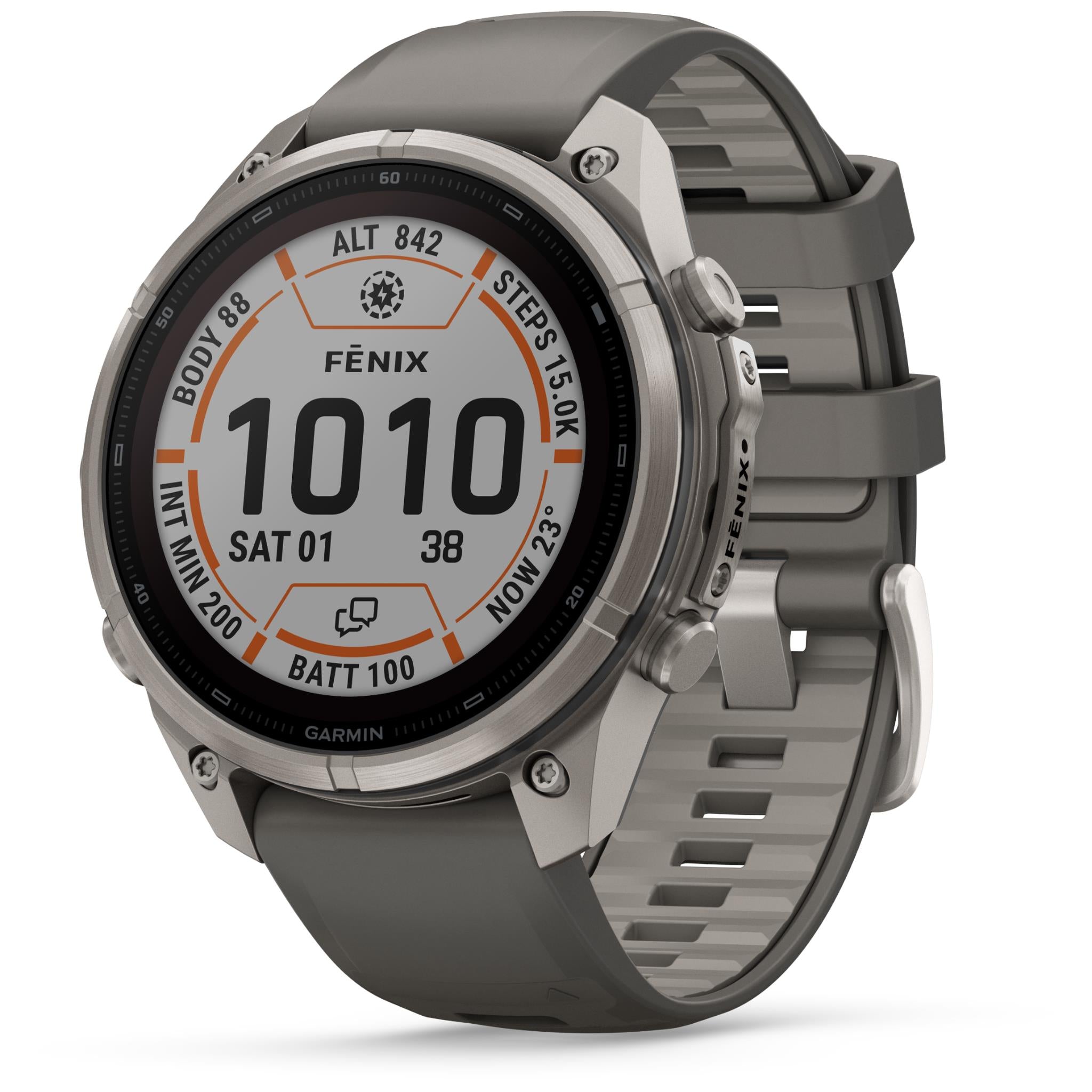
The trade is simple. AMOLED is the brighter, full-colour screen that looks gorgeous. The solar screen gives some of that up for easy reading in bright sun and a far longer battery: up to 48 days on the 51mm Fenix 8 Solar and up to 57 days on the 51mm Fenix 9 Pro Solar, assuming about three hours a day outdoors. Pretty and bright, or patient and sun-friendly. The Fenix 8 Pro and the Epix Pro have no solar version, so for those two the screen is AMOLED (the Fenix 8 Pro also comes with a MicroLED one).
Are the discounted older ones the smarter buy?
Here is the twist. You would expect the old models to be bargains now. At a major retailer they mostly are not. The sapphire Fenix 8 is listed for more than the base Fenix 9, and the Fenix 8 Pro sits well above both. When the newer watch costs the same or less, the older one is no longer a deal, it is a compromise. The Epix Pro is the exception, because its sale price lands level with the Fenix 9.
So the verdict, as honestly as I can give it from the research: once the hype settles, the earlier flagships are plenty for most people, and upgrading from one is a want, not a need. If you already have an Epix Pro, a Fenix 8 or a Fenix 8 Pro, keep wearing it and let the itch pass. If you are shopping from scratch, the Fenix 9 is the one that makes sense.
The four side by side
I like seeing it all in one place, so here is the short version of what is the same and what is not. The battery figures are Garmin's "up to" claims for smartwatch mode.
| Fenix 9 | Fenix 8 | Fenix 8 Pro | Epix Pro | |
|---|---|---|---|---|
| Screen type | AMOLED. The 9 Pro Solar has a solar screen instead | AMOLED, or a solar (MIP) screen in 47 and 51mm | AMOLED, or MicroLED in 51mm. No solar version | AMOLED only |
| Solar charging | 9 Pro Solar only (47 and 51mm) | Solar versions only (47 and 51mm) | No solar version | No solar version |
| Battery, 47mm AMOLED, smartwatch mode | Up to 16 days (9 Pro: 18) | Up to 16 days | Up to 15 days | Up to 16 days |
| Battery, 51mm AMOLED, smartwatch mode | Up to 29 days (9 Pro: 31) | Up to 29 days | Up to 27 days | Up to 31 days |
| Battery, 51mm solar, smartwatch mode | 9 Pro Solar: up to 57 days | Solar: up to 48 days | No solar version | No solar version |
| Storage | 64GB | 32GB | 32GB | 32GB |
| Maps | Preloaded maps, twice as many stored as Fenix 8 | Preloaded maps on Sapphire editions | Preloaded maps | Preloaded maps on Sapphire editions |
| Case | Titanium bezel. 9 Pro: full titanium case | Titanium bezel on some versions | Titanium bezel and back | Titanium bezel and back (Sapphire Edition) |
| Lens | Sapphire | Glass or sapphire | Sapphire | Sapphire Edition available |
| Water rating | 10 ATM | 10 ATM | 10 ATM | 10 ATM |
| Flashlight | Yes. 9 Pro adds a green mode | Yes | Yes | Yes |
| Satellite and mobile messaging | Pro models only, with a paid plan and local coverage | No | Yes, with a paid plan and local coverage | No |
| Sizes | 43, 47 and 51mm | 43, 47 and 51mm | 47 and 51mm (plus MicroLED 51mm) | 42, 47 and 51mm |
So the basics are close. All four have a flashlight, a 10 ATM water rating, preloaded maps on the sapphire versions and about two weeks of battery on the 47mm AMOLED models. The differences sit elsewhere. The Fenix 9 has a screen Garmin says is about twice as bright as the Fenix 8, double the storage at 64GB against 32GB, and quicker maps. The Pro models add satellite and mobile messaging, which needs a paid plan and depends on coverage where you are, and the Fenix 9 Pro adds titanium all round and a Solar version.
At a glance
- Garmin Fenix 9 (47mm AMOLED): $1,699 at JB Hi-Fi. Garmin lists the range from $1,599. About twice as bright as the Fenix 8, 64GB storage, about 16 days of smartwatch battery.
- Garmin Fenix 9 Pro (47mm AMOLED): $1,849 at JB Hi-Fi. Garmin lists Pro models from $1,749. Titanium case, up to 18 days of smartwatch battery, satellite and mobile messaging with a paid plan.
- Garmin Fenix 9 Pro inReach Solar (47mm): $1,899 at JB Hi-Fi. Solar screen instead of AMOLED, up to 34 days of smartwatch battery with solar.
- Garmin Fenix 8 (47mm AMOLED, sapphire): $1,849 at JB Hi-Fi. 32GB storage, about 16 days of smartwatch battery.
- Garmin Fenix 8 Pro (47mm): $2,099 at JB Hi-Fi. Built-in satellite and mobile messaging, titanium bezel.
- Garmin Epix Pro Gen 2 (47mm, sapphire): $1,699 at Myer, reduced from $1,999. About 16 days of smartwatch battery.
Verdict: The Fenix 9 is the best flagship Garmin right now, but upgrading from an Epix Pro, Fenix 8 or Fenix 8 Pro is a nice-to-have, and the older models are enough for most people. But do I still want one, ABSOLUTELY!