Milan Fashion Week SS27: six takeaways from Prada, Gucci, Fendi and more
Skirts at Prada, lingerie as outerwear at Fendi, Demna's glamorous Gucci and Glenn Martens' Diesel farewell. The key takeaways from Milan's Spring/Summer 2027 shows.

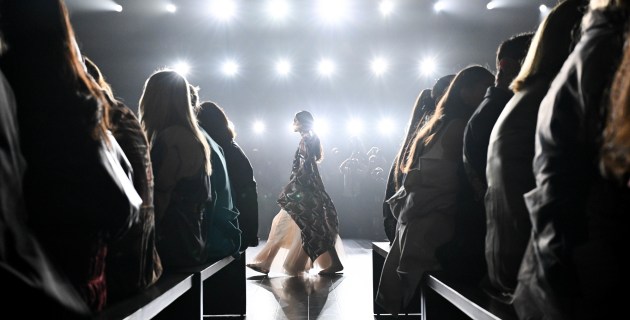
Milan Fashion Week for Spring/Summer 2027 runs from 22 to 28 September 2026, with 54 physical runway shows and six digital presentations on the calendar. It arrives at a tricky moment for Italian fashion, with the industry's own chamber forecasting a small fall in turnover this year, and the big houses responded with a mix of sensuality, archive-led confidence and a few carefully managed changes of guard. These are the takeaways worth knowing, from Prada's skirts to Gucci's glamour and Diesel's farewell.
1. The skirt is the story at Prada
Prada opened the week for the first time, and Miuccia Prada and Raf Simons built their collection around a single garment. Titled "The Skirt", the show all but dropped trousers in favour of knee-length and mini skirts in sheer, sequinned, pleated, embroidered and floral versions, some with crystal embroidery and decorative crinolines in oilskin, wool or nylon. The show notes called the skirt "a Prada obsession" and "a frame for ceaseless creation."
The accessory talking point was a comeback: the banana heel, first seen at Prada for Fall/Winter 2007, returned as an exaggerated peep-toe pump in brushed black leather. Off the runway, Prada also opened an expanded flagship in Milan's Galleria Vittorio Emanuele II, an eight-floor space combining retail, a museum and private salons.
2. Lingerie comes out from underneath
If there was one shared idea across the week, it was underwear as outerwear. At Fendi, Maria Grazia Chiuri's second collection for the house took inspiration from Italian pop star Raffaella Carrà, with bras worn as visible statement pieces, satin pyjama shorts, semi-sheer slip dresses and plunging necklines in a palette running from purple and pastel green to peach. Numéro summed it up neatly: "The boundaries between daywear, lingerie and eveningwear fade away."
Prada's skirts were also largely paired with bralettes, which suggests Australians should expect exposed layering to filter into local collections over the next year.
3. Demna's Gucci goes full glamour
Demna's second Gucci collection was shown on 25 September in a custom-built replica of a Gucci flagship store, turning shopping itself into the set. The Zoe Report described it as a full reveal of his vision for the house. It opened with polished, equestrian-inflected dressing, Boston bags and GG monogram belts, then moved through 1980s power suits with thigh-grazing mini skirts, low-waisted pencil skirts with bralettes and strong-shouldered blazers, before closing on slinky jersey gowns with cutouts and high slits. Leather bombers and cheetah-print teddy coats covered outerwear.
The cast was a statement too, with Rosie Huntington-Whiteley, Elsa Hosk, Anok Yai and Alex Consani among the models. Demna's own framing: "Gucci stands for being rooted in the desire to belong to a more glamorous world and the audacity to remake that world in your own image."
4. Colour arrives at Jil Sander, and Marni goes 60s
Jil Sander, known for its neutral palette, surprised under Simone Bellotti with sky blue, pale pink and plum, alongside deconstructed tailoring and unexpected pleating that moved from sleek basics towards more textured, whimsical gowns. Numéro called it "an unprecedented aesthetic for a brand accustomed to neutral colour palettes."
At Marni, Meryll Rogge's second show leaned on 1960s shapes in pastels and bold tangerine, staged on wooden runway architecture reused from a previous show. Brunello Cucinelli, meanwhile, blended workwear with delicate fabrics in ivory, khaki and warm neutrals.
5. Diesel says goodbye to Glenn Martens
Glenn Martens presented his final Diesel collection, closing a tenure credited with moving the denim brand upmarket. True to form, the show planted performers in the audience to create "happenings" during the presentation, with destroyed garments, distressed denim, low-slung shapes and head-to-toe leather. Martens also showed MM6 Maison Margiela in Milan, where garment manipulation was the theme: flip-flops reworked into shoes and repurposed tops that altered entire silhouettes.
6. New faces and a nervous market
The week's most anticipated debut was at Moschino, where Loris Messina and Simone Rizzo, the duo behind Milan label Sunnei, took over as co-creative directors with a show on 25 September. Portuguese labels Marques'Almeida and Miguel Vieira and Ecuadorian designer Neithan Ruiz were also first-time names on the Milan schedule.
The commercial backdrop is sober. Carlo Capasa, president of the Italian Chamber of Fashion, said it would be "a miracle" if the sector held its ground, with the chamber forecasting a 1.6 per cent decline in turnover for the year. Big houses are still investing in bricks and mortar, though: alongside Prada's Galleria flagship, Dior unveiled a multi-storey boutique on Via Montenapoleone with a restaurant by Michelin-starred chef Enrico Bartolini.
Still to come
The week's final weekend carries some of its biggest names. Louise Trotter shows her Summer 2027 collection for Bottega Veneta on 26 September at 8pm in Milan, livestreamed globally, which is early on the morning of 27 September in Sydney and Melbourne. Dolce & Gabbana and Ferragamo also show on 26 September, Giorgio Armani returns on 27 September under the creative direction of Silvana Armani, and Miguel Vieira closes the week on 28 September, the same day Paris Fashion Week begins.
What it means for Australian wardrobes
The through-line from Milan is a return to overt femininity and polish: skirts over trousers, visible lingerie details, sharper tailoring and more colour than recent seasons. Expect these ideas to shape what lands in Australian boutiques and department stores for spring and summer 2027, and to show up much sooner in local labels' resort and high-summer drops.