Buying an e-bike in 2026: Australia's new rules explained, state by state
Queensland and NSW have both tightened e-bike laws this year, with licences, seizure powers and a 250W limit on the way. Here is what the rules now say, and how to make sure the e-bike you buy is legal.

Spring is when plenty of Australians get back on the bike, and this year the rules have moved under riders' wheels. Queensland introduced sweeping e-mobility laws in two phases on 1 July and 31 August 2026, and NSW gave police new powers to seize illegal e-bikes from 21 August while locking in a shift to a 250W power limit. If you are shopping for an e-bike this spring, the difference between a legal bike and an illegal one now matters more than ever: in some states, the wrong bike can be seized and destroyed.
Here is what has changed, what stays the same, and what to check before you hand over your money.
The basic definition: what counts as a legal e-bike
A legal e-bike is essentially a bicycle with a helping motor, not a motorbike with pedals. Queensland's StreetSmarts guidance sets out the test clearly. A compliant e-bike:
- "Has an electric motor powered by no more than 250 watts"
- "Stops providing motor assistance at 25km/h", after which you pedal on your own
- "Can be throttle-controlled only up to 6km/h, to help you start moving"
- Has pedals as "the primary source of power", with the motor supporting them
Victoria's rules, published by Transport Victoria, follow the same pattern: a maximum continuous rated power of 250 watts, assistance cutting out at 25km/h, and walk mode permitted up to 6km/h without pedalling. Throttle-only riding above that is not allowed, and bikes must have working pedals. Converted bikes must meet the same requirements as factory-built e-bikes.
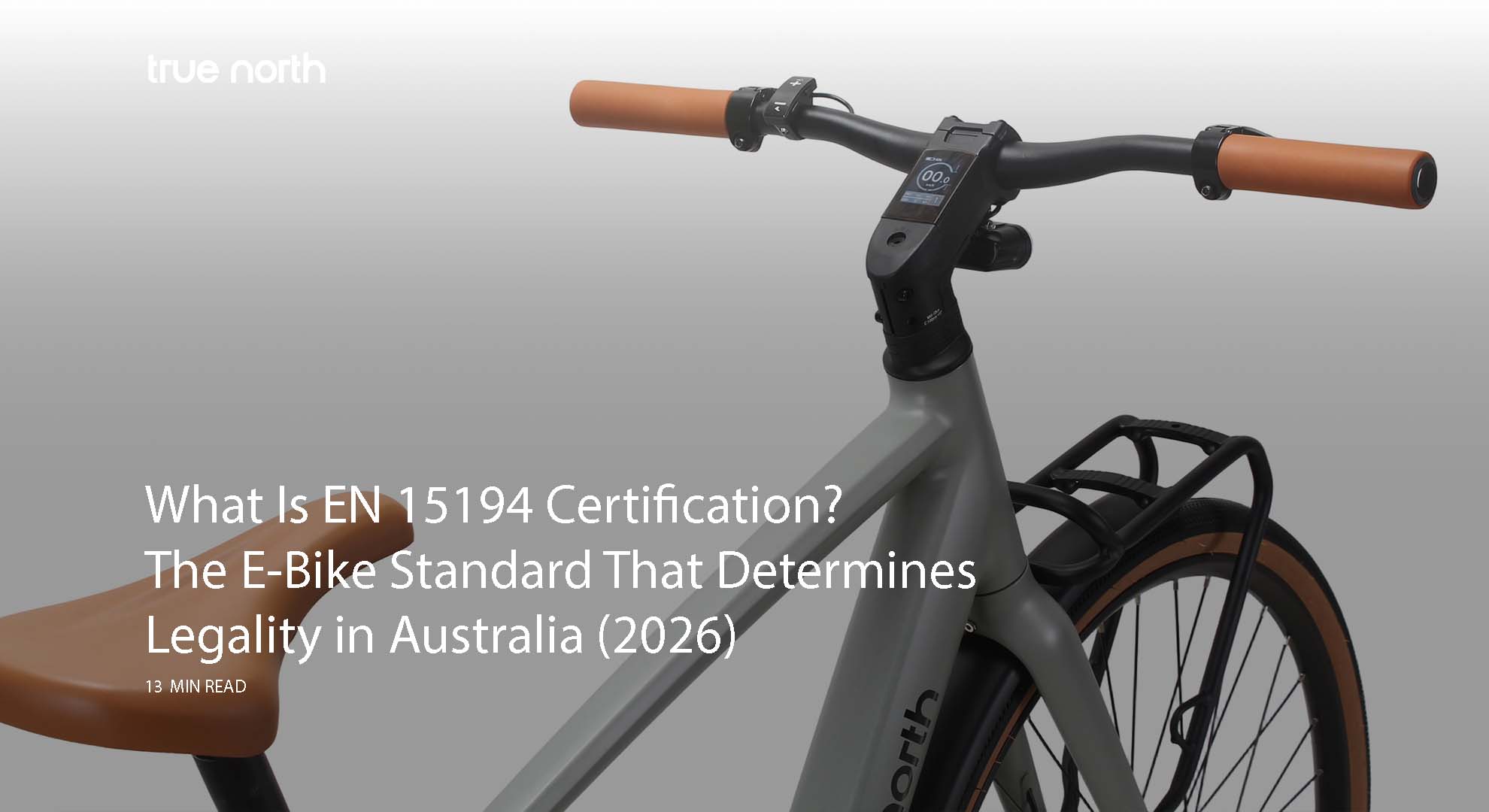
The key standard to look for is the European standard EN 15194. Both Victoria and NSW advise buyers to choose bikes that comply with it, and Queensland is making it compulsory.
Queensland: licences, police powers and path speed limits
Queensland has gone furthest. Announcing the laws on 2 June 2026, Transport and Main Roads Minister Brent Mickelberg said: "Our reforms are based on extensive community and expert consultation, and they strike the right balance between making our streets safer from those who do the wrong thing, while backing those people who do the right thing."
From 1 July 2026, the first phase introduced:
- A 12km/h speed limit for e-bikes and e-scooters on footpaths and when passing pedestrians on shared paths
- Police powers to seize and destroy illegal devices
- Random breath testing for riders in public places
- A ban on devices that exceed 25km/h unassisted
- Tougher penalties for speeding, helmet offences, careless riding and carrying passengers, plus parental accountability for children under 16
From 31 August 2026, the second phase requires e-bike and e-scooter riders to hold a valid driver licence, including a learner licence, according to the ABC's explainer, with medical exemptions to be available. Riders aged 12 to 17 without a licence need parental supervision. The ABC reports fines of A$518 for offences including riding without a licence or helmet, speeding fines of A$345 to A$1,986 depending on speed, and drink-riding penalties of A$518 to A$6,908.
Owners also have a deadline: e-bikes in Queensland must carry the official EN 15194 compliance label by 28 February 2027.
NSW: 500W for now, 250W by 2029
NSW has been the outlier. According to Transport for NSW, e-bikes in the state can currently have a maximum continuous rated power of 500 watts, with the motor cutting out at 25km/h and throttle-only assistance limited to 6km/h. That changes on 1 March 2029, when the limit drops to 250W and only EN 15194-certified e-bikes will be allowed on NSW roads.
The practical point for buyers: a 500W bike bought in NSW today has a limited legal life on NSW roads, and it does not meet the 250W limit that applies in Queensland and Victoria. If you plan to keep a bike for years, or ride interstate, a 250W EN 15194 model is the safer purchase.
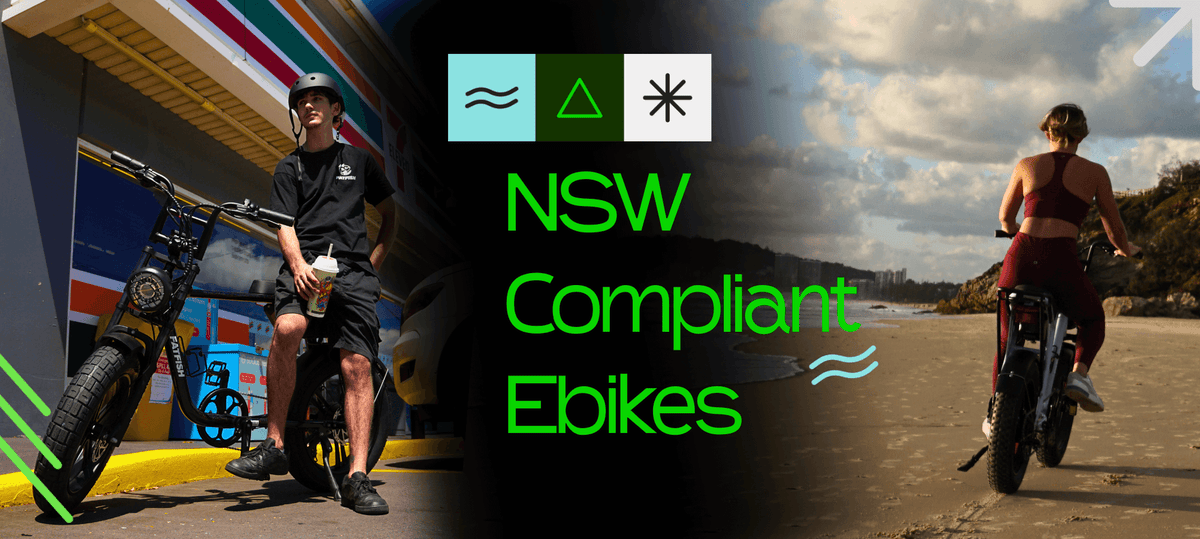
NSW also moved on enforcement this year. From 21 August 2026, NSW Police and authorised officers gained expanded powers to seize illegal e-bikes, and Transport for NSW says the new laws include crushing them. Separately, shared e-bike operators now need Transport for NSW approval and council authorisation, with penalties of up to A$55,000 for non-compliance, as reported by Urban List. A minimum riding age for private e-bikes was still being considered at that point.
The usual bicycle rules continue to apply in NSW: an approved helmet must be worn and fastened, and riders aged 16 and over cannot ride on footpaths unless supervising a child under 16.
A buyer's checklist for spring
Whichever state you live in, these checks will keep you on the right side of the law:
- Check the motor rating. Look for 250W continuous rated power. Anything above that is illegal in Queensland and Victoria, and is only legal in NSW until 1 March 2029.
- Look for the EN 15194 label. It is compulsory in Queensland from 28 February 2027 and in NSW from 1 March 2029, and recommended in Victoria.
- Test the throttle. A throttle should only work up to 6km/h. Bikes that can be ridden on the throttle alone at higher speeds are not legal e-bikes.
- Be wary of "unlocked" or "off-road" modes. Queensland's guidance warns that "even if it has pedals, it may not be a legal e-bike", and modifications that break the rules make a bike illegal.
- Check converted bikes carefully. In Victoria, a converted bike must meet the same requirements as a factory e-bike, and converted e-bikes are banned from trains and ticketed public transport areas.
- Budget for a helmet and lights. A properly fitted helmet is mandatory, and Transport Victoria advises using lights in low light.
Where to check the rules
Rules differ between states and are still changing, so check the official source before you buy: Queensland's StreetSmarts site, Transport for NSW and Transport Victoria all publish plain-English guides. Ask the retailer to confirm the motor's continuous rated power and EN 15194 certification in writing, and keep the paperwork: in Queensland and NSW, it may be what stands between your new bike and the crusher.
Sources: Queensland Government StreetSmarts, Transport for NSW