iPhone Duo vs Galaxy Z Fold8 vs Pixel 11 Pro Fold: Which Foldable Should You Buy in Australia?
Apple has finally entered the foldable fight. Here's how the iPhone Duo stacks up against Samsung's Galaxy Z Fold8 and Fold8 Ultra and Google's Pixel 11 Pro Fold, with local prices.
For years, buying a book-style foldable in Australia meant choosing between Samsung and Google. That changes this spring. Apple's first foldable, the iPhone Duo, arrives on 23 October, straight into a market where Samsung already has two new Galaxy Z Fold8 models on shelves and Google's Pixel 11 Pro Fold is sharpening its pitch. All four phones cost well over A$2,500. Here's how they compare, and who each one suits.
The prices at a glance
- Samsung Galaxy Z Fold8: A$2,699 (256GB), A$2,999 (512GB), A$3,599 (1TB)
- Google Pixel 11 Pro Fold: A$2,799 (256GB), A$2,999 (512GB), A$3,349 (1TB)
- Samsung Galaxy Z Fold8 Ultra: from A$2,999, up to A$3,899
- Apple iPhone Duo: from A$3,499, on sale 23 October
The first thing that stands out is that the standard Fold8 is now the cheapest way into a big-screen foldable. It undercuts the Pixel by A$100 at the entry level and sits A$800 below Apple's starting price. Meanwhile, the Fold8 Ultra's entry price lands A$500 under the iPhone Duo.
Apple iPhone Duo: the newcomer
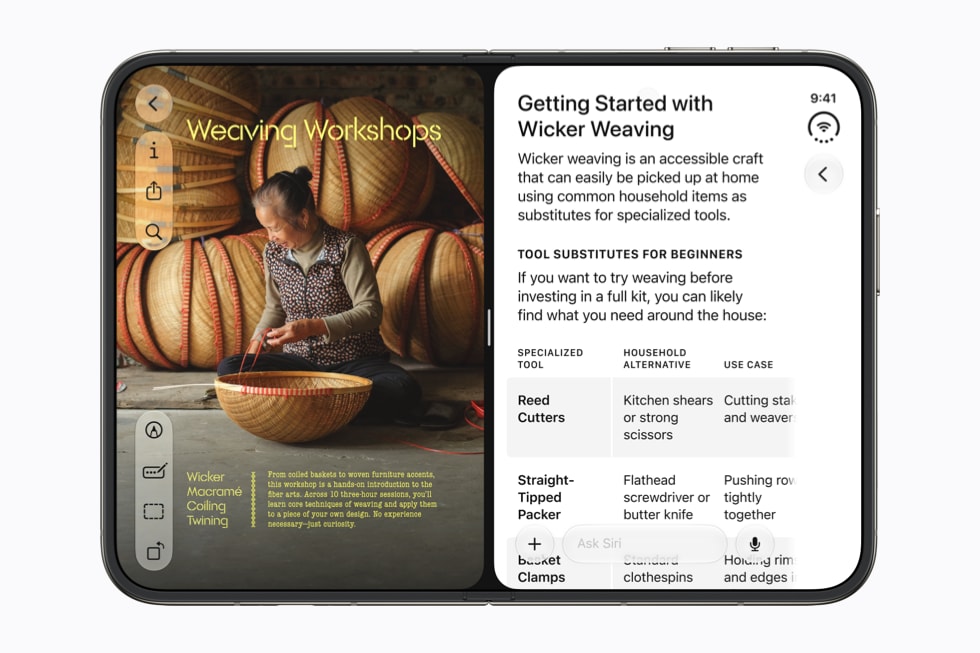
Apple has taken its time, and it shows in the details. The iPhone Duo opens like a book into the biggest screen Apple has ever put in an iPhone, and closes down to a pocketable phone with its own outer display. It runs on the A20 Pro chip, with a custom vapour chamber for cooling and a dual-battery design that Apple says delivers all-day battery life. It's also eSIM-only worldwide, which Apple says frees up internal space for more battery.
Software is where Apple is betting it can win. iOS 27 has been reworked for the Duo: the Dock and app controls move to the side of the screen, and Split View, with two apps side by side, comes to iPhone for the first time. You can open two windows of the same app, save app pairs to return to later, and talk to Siri AI while it looks at whatever is on the other half of the display. A FaceTime camera under the inner screen means video calls work with the phone open or propped up.
Accessories are extra: the iPhone Duo Case is A$119 and the iPhone Duo Folio with Kickstand is A$199, both available to order from 16 October.
Best for: anyone already committed to Apple who has been waiting for a foldable that works seamlessly with their Mac, Watch and AirPods. It's also a first-generation product at the highest price here, so early adopters should factor that in.
Samsung Galaxy Z Fold8: the rethink
Samsung has changed shape this year. The standard Fold8 now has a proper 4:3 main display when unfolded, closer in feel to a paperback than a widescreen, with a narrower 10:16 cover screen for quick checks on the go. At 201g, it's light for a device of this size. It has a 4,800mAh battery with 45W fast charging, and Samsung quotes up to 26 hours of video playback.
Galaxy AI features come built in, including Now Nudge, which surfaces suggestions based on what you're doing. Colours are Lavender, Graphite and Cream, plus a Pistachio finish sold only through Samsung.
Best for: people who want the most refined, best-value foldable right now, and who read, watch and browse more than they multitask.
Samsung Galaxy Z Fold8 Ultra: the powerhouse
For the first time, Samsung has split its Fold into two tiers. The Ultra is the productivity flagship: an 8-inch main screen, a 200MP triple camera system, Samsung's newest Snapdragon chip and the most RAM in the range. Samsung pitches it at working, immersive gaming and side-by-side tasks.
Best for: power users who want a tablet in their pocket and the best cameras on a foldable, and who would otherwise have bought a Galaxy S Ultra.
Google Pixel 11 Pro Fold: the smart pick
Google's foldable has always leaned on software and cameras rather than raw specs, and the Pixel 11 Pro Fold continues that approach. You get Google's computational photography and the cleanest version of Android, with Gemini built deep into the system. Its price now puts it right on top of the standard Fold8. That makes the choice between them less about money and more about whether you prefer Google's software and camera processing or Samsung's hardware and ecosystem.
Best for: Pixel fans, photographers who like Google's look, and anyone who wants Gemini at the centre of their phone.
What really separates them
Ecosystem beats specs
At this price, every one of these phones is fast, well built and capable. The deciding factor for most people will be the ecosystem they already live in. If you have a Mac and an Apple Watch, the iPhone Duo is the only one here that fits properly. If you use Windows, a Galaxy Watch or Samsung's tablets, the Fold8 range makes more sense. If you're all-in on Google services, the Pixel is the natural fit.
AI is now the pitch
All three brands are selling their foldables as the best way to use AI on a phone. Apple has Siri AI with personal context and onscreen awareness (in beta, and with daily usage limits on server-side features). Samsung has Galaxy AI. Google has Gemini. The larger inner screen is what makes these assistants useful, because you can keep a conversation open next to the thing you're working on.
Maturity matters
Samsung is on its eighth generation of the Fold. Google has several generations of foldables behind it. Apple is on its first. Apple's hardware launches are usually polished, but a hinge and folding screen are new territory for the company. Buyers who keep phones for four or five years may prefer to wait for real-world durability reports before committing.
The verdict
- Best value: Galaxy Z Fold8 at A$2,699
- Best for power users: Galaxy Z Fold8 Ultra
- Best for Apple households: iPhone Duo
- Best for Google fans and photographers: Pixel 11 Pro Fold
Apple's arrival is good news whichever way you lean. Competition is already putting pressure on prices, and the software on all three platforms is finally being designed around folding screens rather than stretched to fit them. If you've been waiting for foldables to grow up, this is the year they did.
Sources: Apple Newsroom Australia, Samsung Australia