OpenAI launches GPT-6 Sol and Luna, cheaper models for ChatGPT and Codex
GPT-6 Sol and Luna bring much of OpenAI's flagship Astra capability to ChatGPT and Codex at half the API price of the previous generation, with Luna reaching free users on desktop.
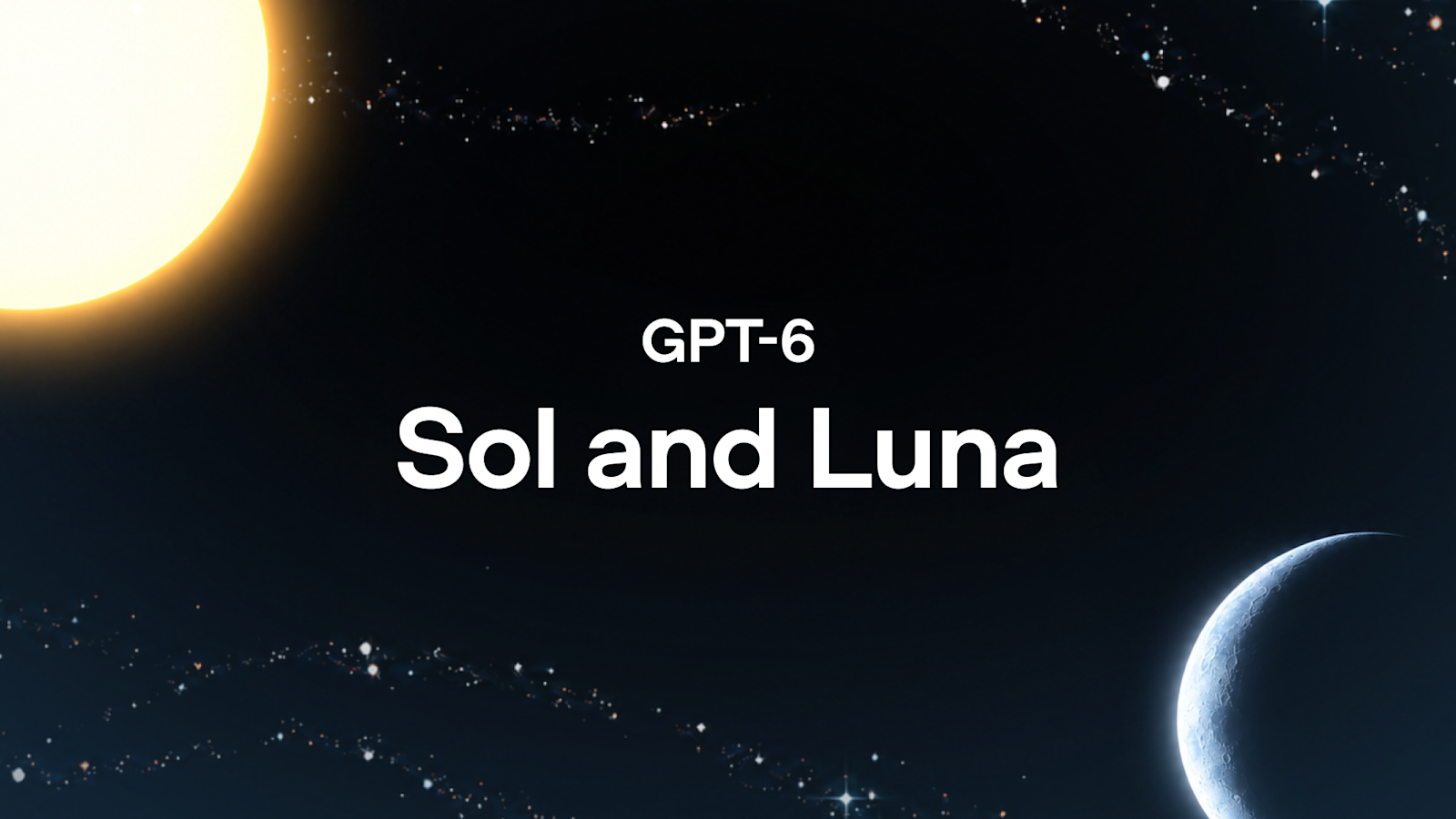
OpenAI has added two more models to its GPT-6 family. Announced on 22 September 2026, GPT-6 Sol and GPT-6 Luna sit below the flagship GPT-6 Astra that OpenAI introduced earlier in September, and are designed to bring much of that model's capability to everyday work at a far lower cost. For Australians paying for ChatGPT, the practical upshot is higher usage limits on a capable model, while free users get access to Luna for the first time.
Two models, two jobs
OpenAI says both models were trained using methods similar to GPT-6 Astra and bring gains in professional work, factuality, coding, computer use and alignment. Sol is the heavier of the two, pitched at complex jobs such as coding and multi-step tasks. Luna is the lightweight option, suited to clerical work like summarising documents and pulling information out of files.
OpenAI's own line on Sol is that it "can take on difficult work tasks while giving you more room to iterate with higher usage limits and lower cost". According to TechCrunch, OpenAI also claims Sol "makes about half as many mistakes as its predecessor, reaching Astra-level reliability at much lower cost."
How it compares
OpenAI published a set of benchmark results that lean heavily on cost. It says Sol scored 68.8 per cent on DeepSWE v1.1 at roughly 80 per cent lower cost per task, and 56.4 per cent on Agents' Last Exam at 60 per cent lower cost per task. The company also claims Sol outperforms Anthropic's Claude Opus 5 on its AutomationBench test at 9 per cent of Opus 5's cost per task. These are OpenAI's figures and have not been independently verified.
The timing is pointed. TechCrunch notes that Anthropic released Claude Opus 5.5 about 90 minutes before OpenAI's announcement, underlining how closely the two companies are now trading blows on price and performance.
Who gets what
The rollout is gradual and split by plan:
- Plus, Pro, Business, Enterprise and Edu: access to both Sol and Luna in ChatGPT Work and Codex.
- Free and Go: Luna only, via the ChatGPT desktop app.
- Standard chat: OpenAI says the models are not yet available in the Chat interface.
For developers, both models are available through the API, and OpenAI has halved prices compared with the GPT-5.6 generation. TechCrunch reports the savings come from caching and inference improvements.
Price and availability
- GPT-6 Sol (API): US$2 per million input tokens, US$10 per million output tokens.
- GPT-6 Luna (API): US$0.10 per million input tokens, US$0.50 per million output tokens.
- ChatGPT: rolling out now to Australian users on the plans above. OpenAI has not announced any Australia-specific pricing changes for its subscriptions.
API pricing is billed in US dollars, so local developers should factor in exchange rates when comparing costs against rival models.
Sources: OpenAI and TechCrunch