Samsung's Galaxy XR Wants to Replace Your Desk, Not Your Phone
Samsung has repositioned its Galaxy XR headset from media device to full spatial computer. It's the most ambitious hardware bet in this year's AI arms race.
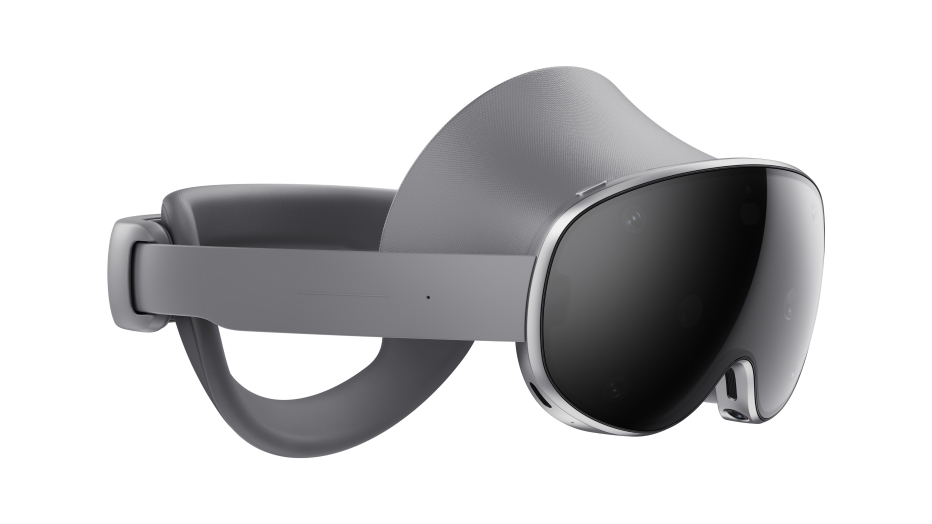
Most of this year's AI hardware push has gone small: glasses, pins, pocket devices. Samsung has gone the other direction entirely with the Galaxy XR, positioning it not as a headset for watching video but as a full AI-powered spatial computer.
From Media Device to Workstation
That repositioning matters. Earlier XR headsets, Samsung's included, leaned heavily on entertainment as the core use case. The Galaxy XR is being pitched instead as a genuine computing environment, with AI processing built in rather than bolted on, aimed squarely at replacing a desk setup rather than a phone in your pocket.
Spec callout: Integrated AI processing, spatial computing form factor.
Under the hood, the Galaxy XR is built jointly by Samsung and Google as the first headset to run the new Android XR platform, powered by a Qualcomm Snapdragon XR2+ Gen 2 chipset and a pair of micro-OLED panels running at 3552 by 3840 resolution per eye. That combination is what lets it handle multitasking across floating windows and AI-driven search without feeling like a stripped-down mobile experience squeezed onto your face.
The Bet Samsung Is Making
It's the most immersive and arguably most ambitious approach among this year's crop of AI-first devices. Where Meta and Google are betting on ambient, worn-all-day hardware, Samsung is betting that some tasks genuinely benefit from full immersion, and that a headset can be a primary computing device rather than a secondary one.
Price and Availability
The Galaxy XR launched at US$1,800 for the 256GB model, with optional hand controllers priced at US$250 (or US$175 if bundled with the headset before a limited-time cutoff). It went on sale first in the United States and South Korea, and as of launch Samsung has not announced plans to bring it to any other market, Australia included.
That leaves Australian pricing unannounced. A straight currency conversion puts the US price at roughly A$2,800, though local pricing typically differs from a simple conversion once local taxes and margins are set, so shoppers should treat that as a rough guide rather than a confirmed figure. For context, Apple's rival headset, the Vision Pro, sells locally for A$5,999 (US$3,499), which puts the Galaxy XR at close to half that price if and when it does arrive here.
Verdict
Whether that bet pays off depends on software support catching up to the hardware ambition, which has historically been the sticking point for every XR platform. But as a statement of intent, the Galaxy XR is the boldest hardware move in this year's AI wave.