Toyota's Wild V8 GR Supra Supercar Is a Racer in a Bodykit
Toyota's newest GR Supra isn't road legal. It's a full Supercars Championship racer built around a Lexus-sourced V8, debuting in Sydney in February.
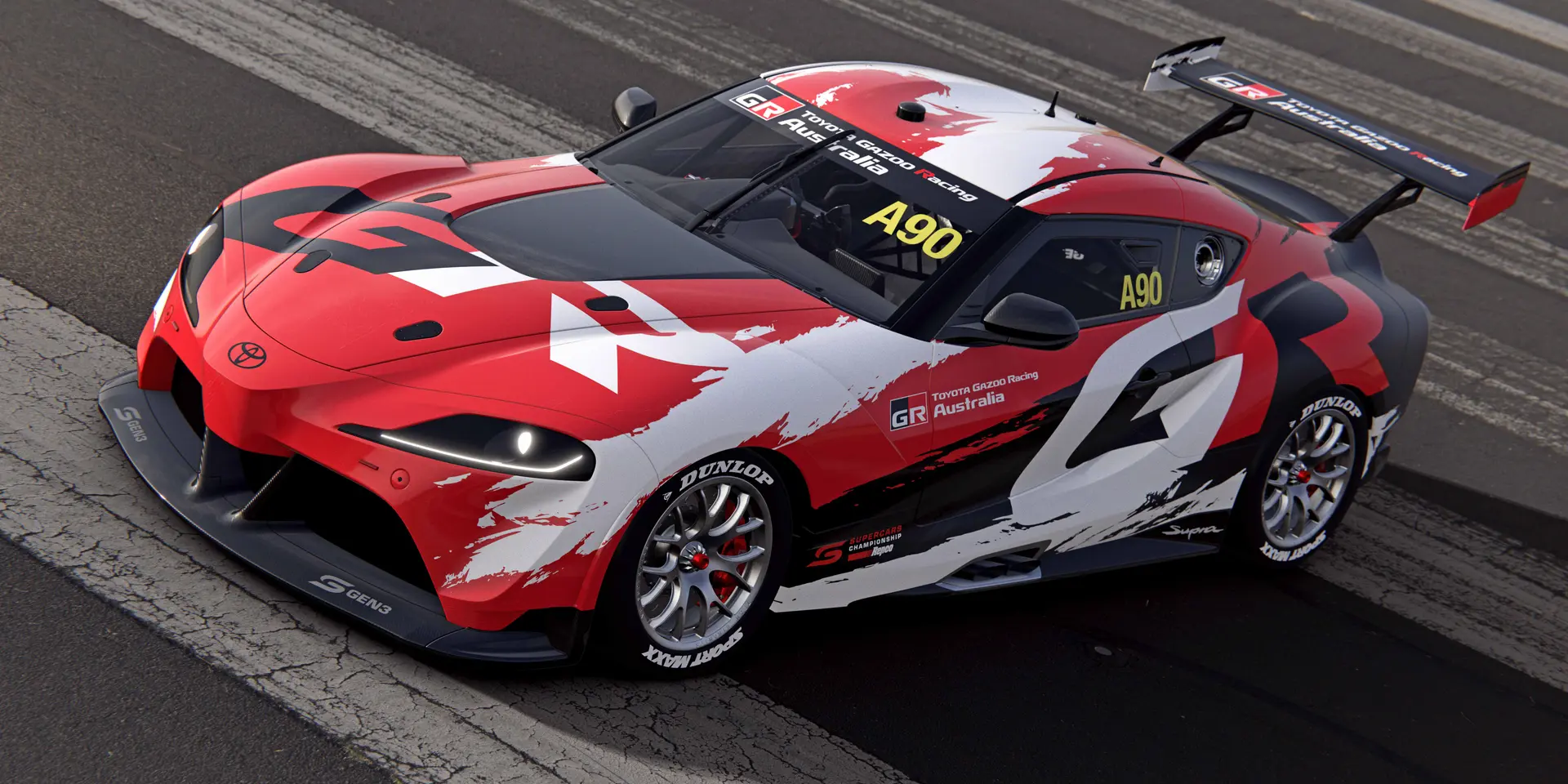
Toyota's newest GR Supra isn't something you can buy, and it isn't road legal either. It's a full Supercars Championship racer, and it's about as far from a showroom model as the Supra name has ever gone.
Australia's Supercars Championship has spent the past few years opening its doors to manufacturers well beyond the Ford-versus-Holden rivalry that defined the category for decades, and Toyota's arrival with a purpose-built GR Supra racer is the clearest sign yet of how far that shift has gone. The series moved to its current Gen3 chassis regulations in 2023, a shared control chassis designed to let manufacturers race distinct body shapes and engine notes without the astronomical development costs of the old formula, and the GR Supra Supercar is one of the first genuinely new silhouettes built specifically for it.
Built for the Track, Not the Showroom
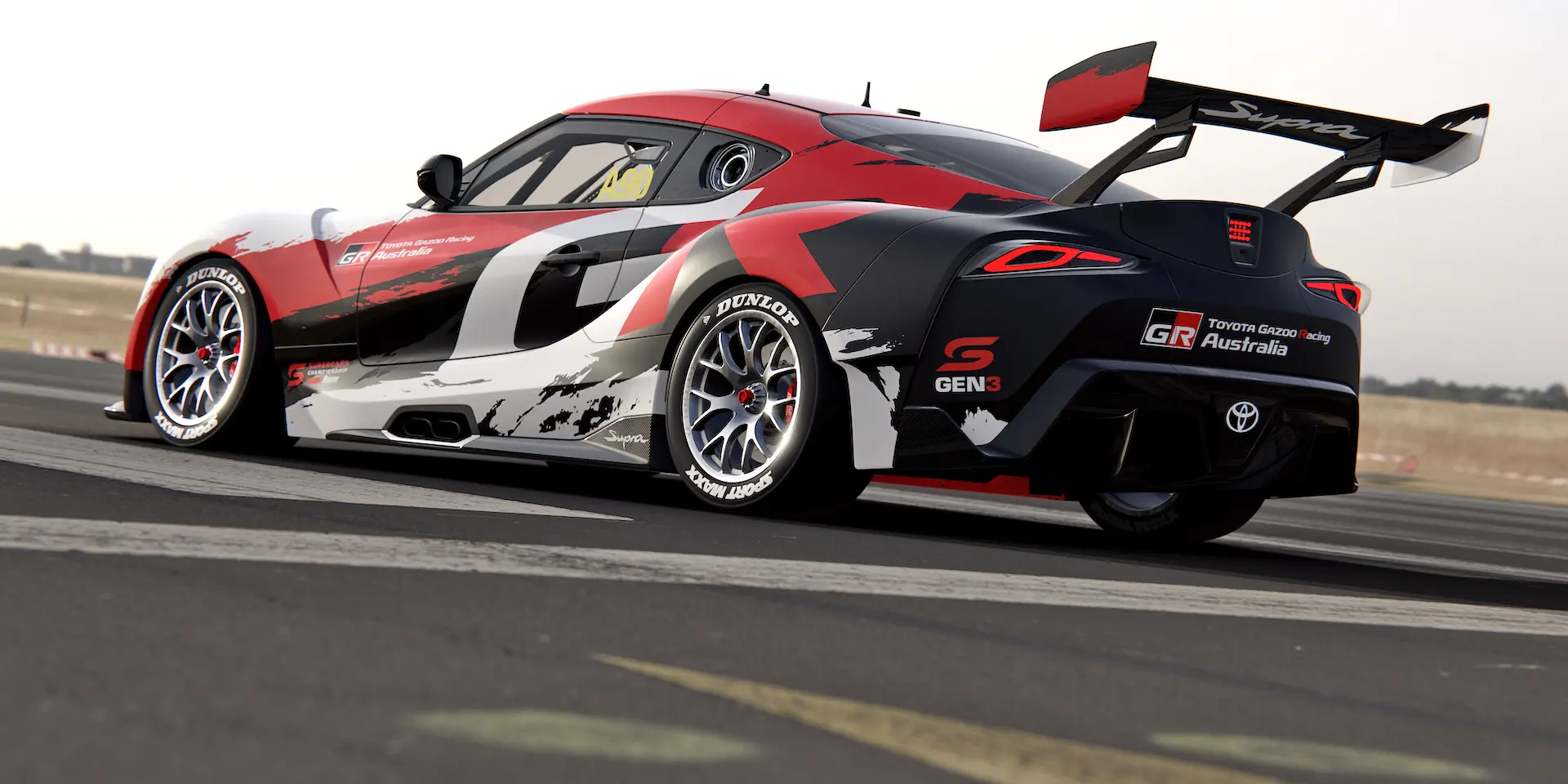
Under the bodywork sits the 2UR-GSE V8, the same engine found in the Lexus IS 500 and LC 500, rather than the BMW-sourced six-cylinder in the road car. The aero package is aggressive by any standard: a wide, low stance, exaggerated front camber, a deeply sculpted nose, a pronounced front splitter and an oversized rear wing, plus a single front wiper and an F1-style rain light mounted at the rear.
The Livery
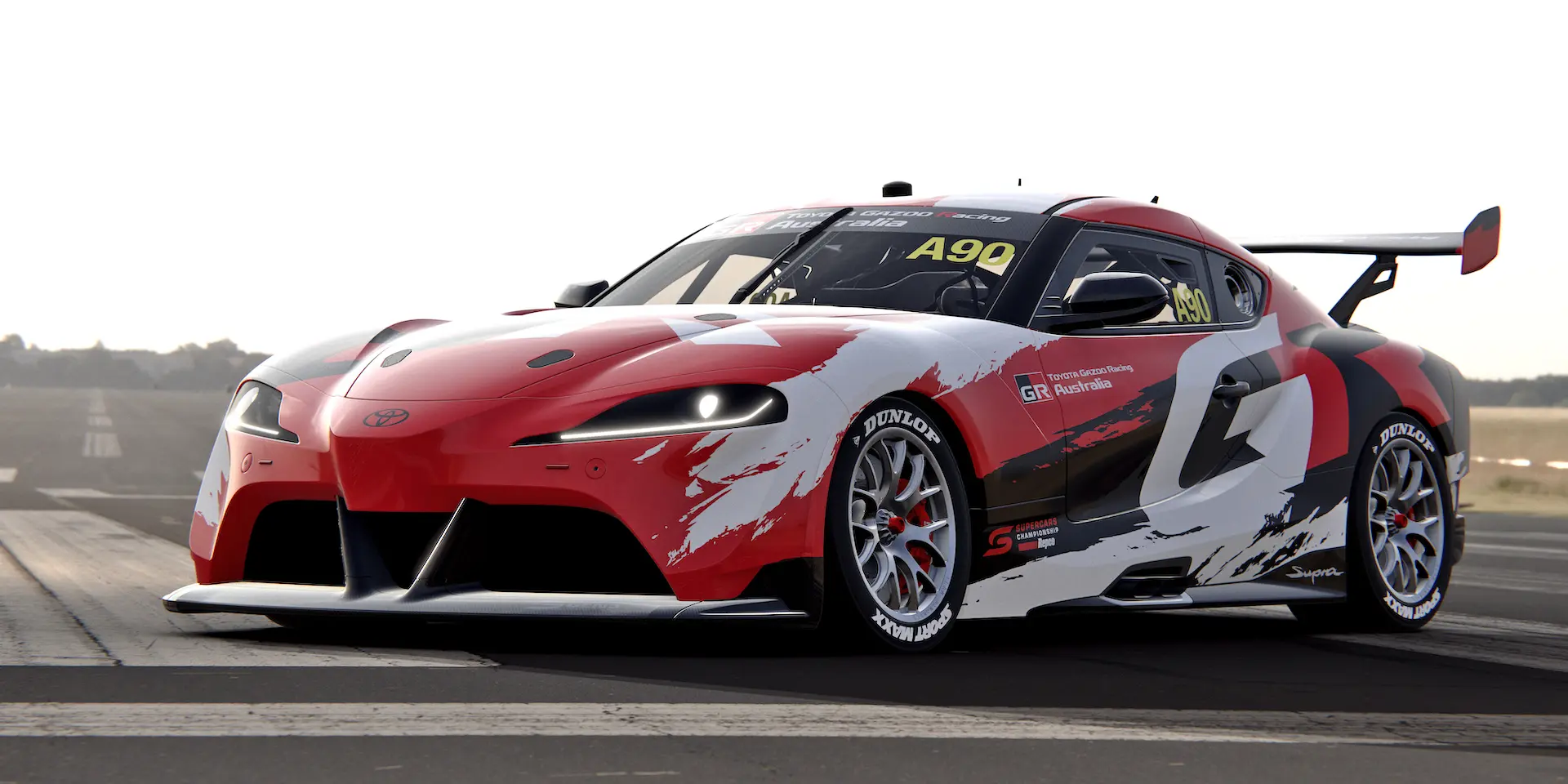
The reveal livery leans heavily into Gazoo Racing branding: a busy mix of red, black and white, side-exit exhausts, an aggressive diffuser, and an "A90" badge on the windows referencing the fifth-generation Supra's internal chassis code. It's a car built to be recognised at 200km/h from the grandstands, not admired in a showroom.
The choice to badge the car with the A90 chassis code rather than any current road-car branding is a deliberate nod to enthusiasts, referencing the generation of Supra that relaunched the nameplate in 2019 after a 21-year hiatus. It's a small detail, but one that signals Toyota is leaning on the Supra's cult following among performance fans rather than trying to sell the racer as a marketing tie-in for the current road car.
Why It Matters
The car is being campaigned by Walkinshaw TWG Racing as part of the Supercars Championship, Australia's premier touring car series, with its competition debut set for February 2026 in Sydney. Walkinshaw Andretti United's rebrand into Walkinshaw TWG Racing came alongside Toyota's arrival, giving the manufacturer an experienced, race-winning team as its entry point into the category rather than building a program from scratch.
For a nameplate that's spent the last few years walking a line between sports car and grand tourer, putting the Supra back on a real racetrack, in a real championship, is a reminder of where the badge came from in the first place. The original Supra built much of its reputation on grip, endurance racing pedigree and a reputation for being tuned relentlessly by its owners, and a factory-backed Supercars program gives Toyota a chance to reconnect the current car with that history in a way that a showroom facelift never could.
Verdict: Not one you'll ever park in your garage, but a proper reminder that the Supra name still means something on a racetrack.