How to Buy Vintage and Pre-loved Furniture Without Getting Burned
Matching suites are out and rooms with a past are in. Find beautiful pieces, learn the checks that save you money and how to spot a bargain.
Learning how to buy vintage and second-hand furniture in Australia is mostly learning to slow down. The matching lounge suite, the sideboard that arrived in a flat box and wobbled by year three: plenty of us are over it. The rooms people actually love now look like they happened over time, a teak sideboard from one place, a leather chair from another, something your nan would recognise sitting next to something you bought last month.
The good news is that the beautiful stuff is out there, and it has already proved it can last. A solid timber piece made decades ago has survived a few house moves, a few kids and a few questionable paint colours, which is more than you can say for most of what is sold flat-packed today. The trick is knowing where to look and when to walk away.
Where to look
Facebook Marketplace and Gumtree are the lucky dip. Prices are friendly and the variety is huge, but so is the rubbish. Search for the good words (teak, solid oak, Danish, mid-century, Parker, Fler) instead of just "sideboard", and set up alerts so you see the nice things before somebody else does. Op shops work the same way: you will not find a gem every visit, but the people who go often and go early are the ones with the great stories.
A colleague of ours has a friend who is completely hooked on op shops. She hunts for bargains, gives them a good wipe down and flips them, and the her stories are the best part: a piece picked up for about $50 that was sold within the week for ten times that. The lesson is the same as above. Go often, go early and learn what a good shape looks like.
Auction houses are the sweet spot if you want quality without a dealer's mark-up. Melbourne and Sydney's Leonard Joel and Sydney's Lawsons both let you browse catalogues and bid online, so you can window-shop in your pyjamas. Just remember most auction houses add a buyer's premium on top of your winning bid, so do the sums before you get carried away.
Dealers cost more, and that is the point. Someone has already done the fussy checking, cleaned the piece up and often fixed it. Melbourne's Angelucci 20th Century has spent over thirty years restoring mid-century furniture, and Grandfather's Axe runs a showroom and an online shop with delivery. If you are nervous about your first big purchase, this is the gentlest way in. This Danish high-board in teak is the sort of piece that makes a whole dining room look finished.

One honest note on dealers: a finished piece in a showroom is the easy road, and it skips the chase. Much of the pleasure in second-hand furniture is the weekend spent poking around a crowded shed or a listing with dreadful photos, then spotting the one good thing everybody else walked past. Dealers are brilliant when you want certainty, but if you love the thrill of the find, save some money and put aside a few Saturdays for the hunt.
What to check before you hand over cash
Give it a shove. Grab a corner and push. Joints that rock or creak usually mean loose glue or dowels. A restorer can sort that out, but it should come off the price.
Run your hand along the edges. Lots of lovely mid-century furniture is veneer over a timber base, which is fine. What you are looking for is bubbling, lifting or water rings, because water damage is the hard one to repair.
Flip it, open it, look underneath. Solid timber has real grain on the back and underside, and good drawers have neat interlocking joints at the corners. Flat-pack gives itself away with crumbly chipboard edges, staples and thin backing board. A maker's stamp or label inside a drawer is a lovely bonus.
Trust your nose. Damp, cigarette smoke and mothballs live in drawers and upholstery and are very hard to shift. If it smells off in the shop, it will smell off in your lounge room.
Measure twice. Measure the piece, then the front door, the hallway, the stairs and the lift. Plenty of beautiful sideboards have ended up on the footpath because nobody did this.
How to haggle without being awkward
A friendly "is there any flexibility on the price?" does most of the work. On Marketplace and Gumtree, sellers expect a little back and forth, and pointing out an honest flaw such as a scratched top or a loose leg gives you a fair reason to ask. Having cash on hand helps, and so does buying two or three pieces from the same seller. Dealers and auction houses are a different game: ask about delivery or small repairs instead of the sticker price.
Getting it home
Hire a van or book a man-with-a-van, and bring blankets and rope. Take legs off where you can, and empty the drawers. A lot of dealers will deliver, which can be well worth it for anything heavy or fragile.
Giving old furniture a second, third or fourth life
Buying second-hand is also part of a bigger shift towards living a little more sustainably. A well-made piece can move through several homes and several looks, and every round keeps something good out of landfill and saves you buying new.
Do not be afraid to give something a coat of paint. Plenty of older furniture has a lovely shape but a naked wood finish might not suit your look, and a fresh colour can make it feel current in an afternoon. Porter's Paints has a beautiful range, including Revive Furniture Paint, which is made for furniture, cabinetry and doors. And if you hate the result, a good sand will usually take you back to where you started.
The one exception is a rare or maker-stamped piece, such as good Danish teak. Those are usually worth more in their original finish, so leave them as they are.
Mixing old and new so it looks collected
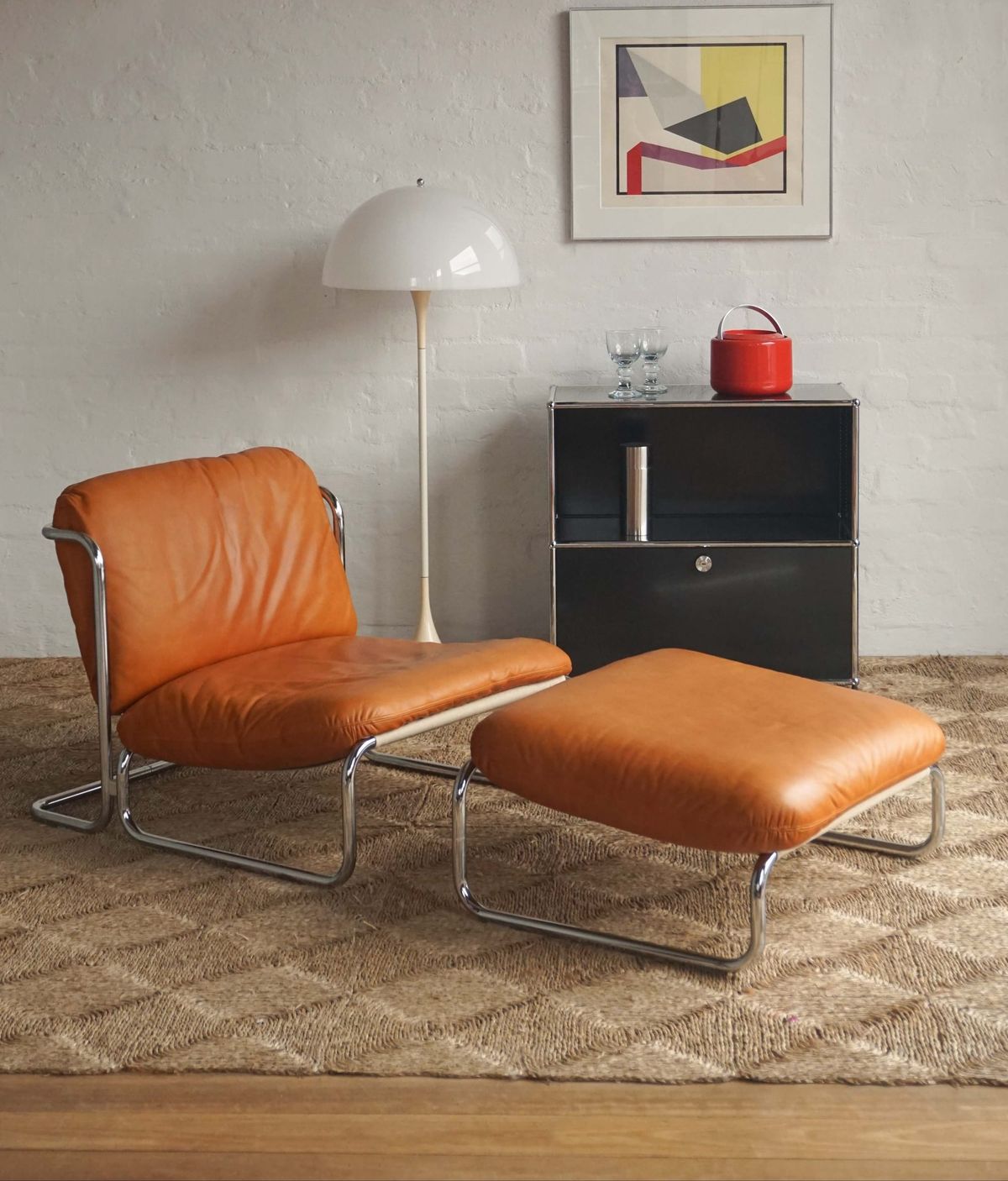
This is the fun part. Give each room one star piece and let it breathe. A leather lounge chair and ottoman in warm tan looks brilliant next to a plain modern sofa, and it makes the whole room feel like it has a personality.
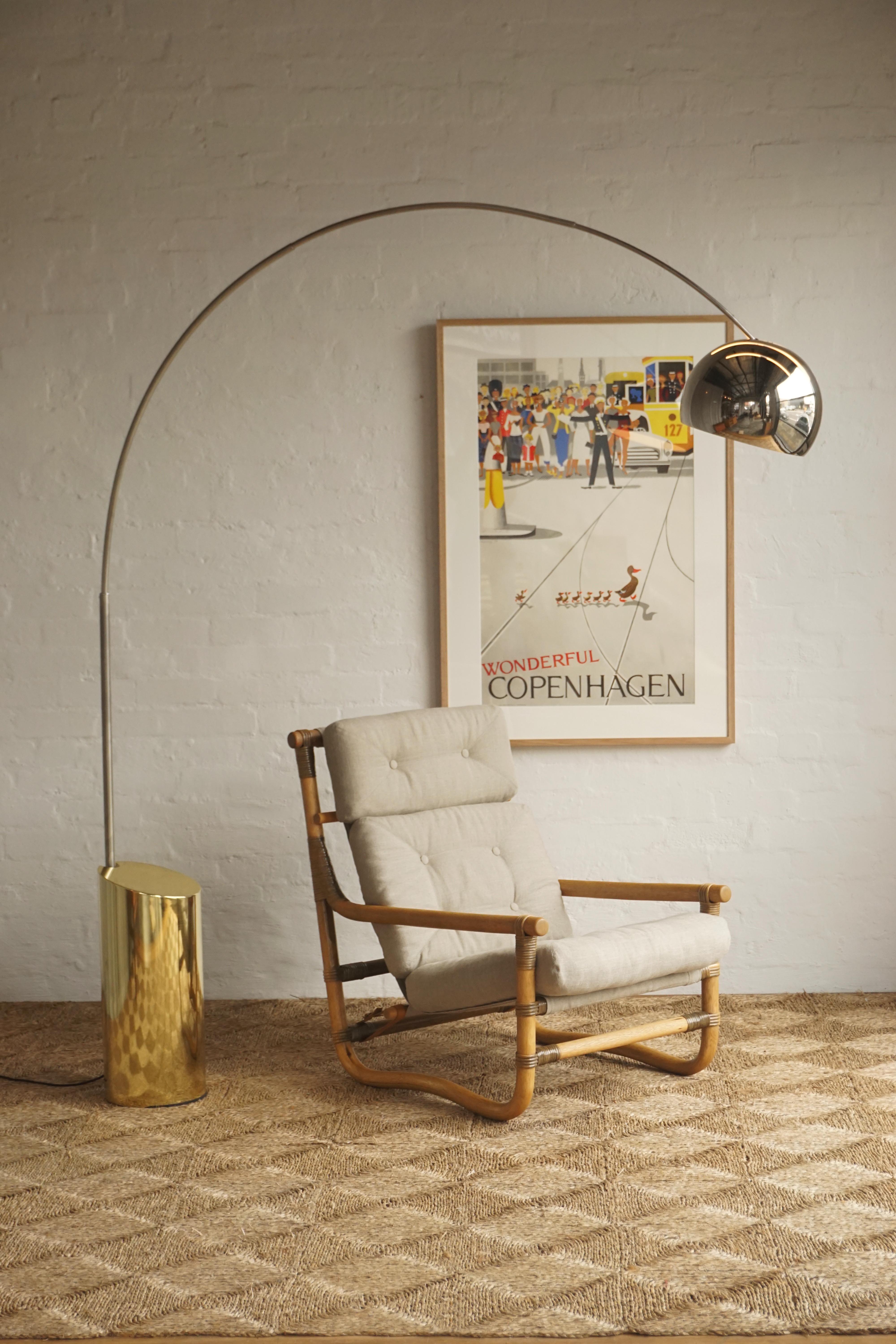
Repeat a colour or timber tone so the pieces talk to each other: a tiled coffee table picks up the warm wood in a bookshelf across the room. Small vintage pieces are an easy first step. A compact bookshelf or a long teak-framed mirror will sit happily in a rented place.
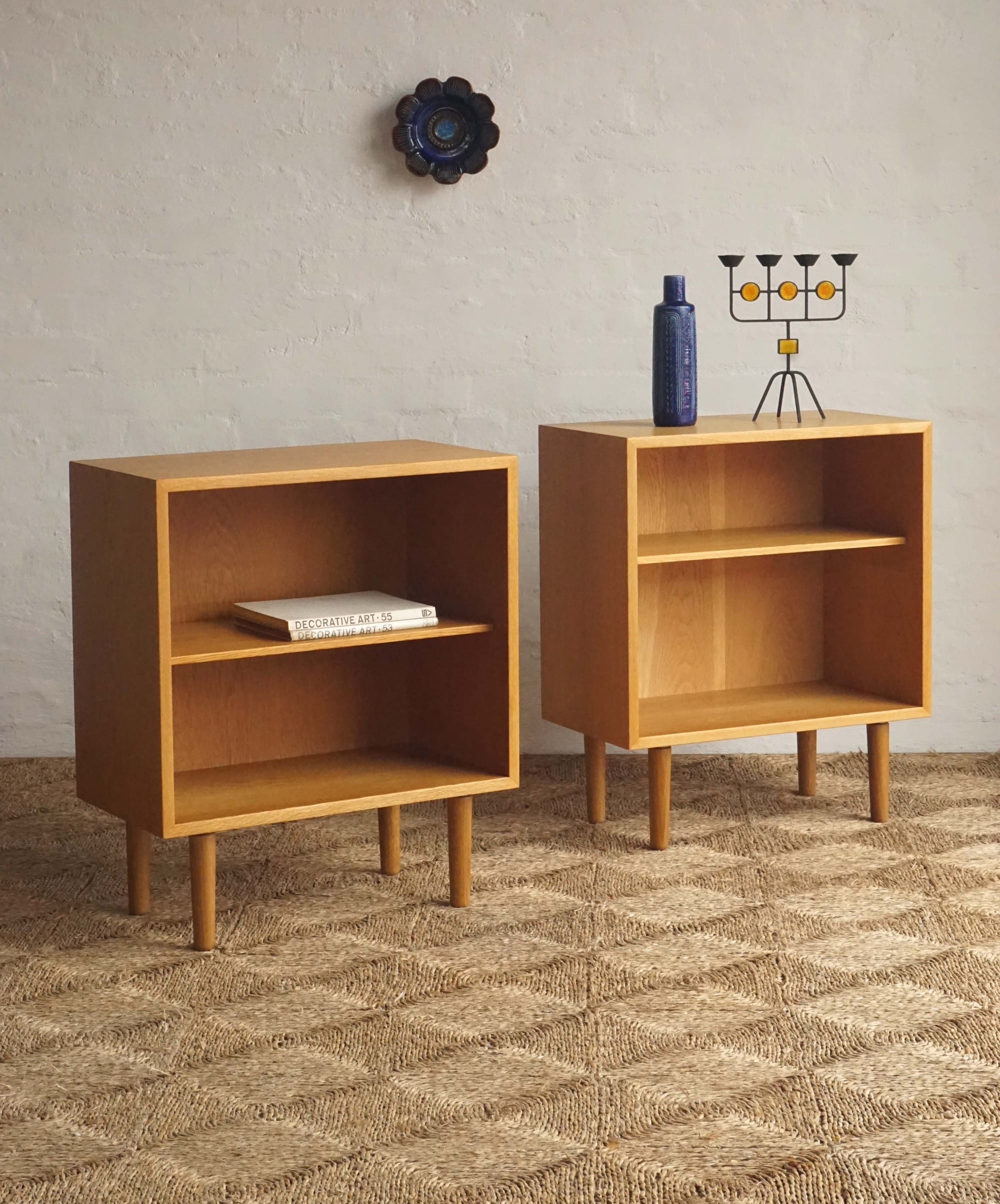

And do not match everything. The point is a room that looks like it was put together over years, not delivered on a Tuesday.
At a glance
- Where to look: Facebook Marketplace, Gumtree, op shops, Leonard Joel and Lawsons auctions, and dealers such as Angelucci 20th Century and Grandfather's Axe
- Check: joints, veneer, smell, solid timber versus chipboard, and the measurements of your doorway
- Danish High-Board in Teak, Grandfather's Axe: $2,950
- Leather Lounge Chair & Ottoman, Angelucci 20th Century: $3,400
- Sallingboe Coffee Table, Angelucci 20th Century: $1,950
- Oresund Small Bookshelf and Large Danish Teak Mirror, Angelucci 20th Century: $990 each
Verdict: Buy fewer, better things: start with one great piece and build the room around it.