Googlebook Explained: What Google's New Gemini Laptops Mean for Australian Buyers
Five brands, a new operating system and a lot of Gemini. Here's everything you need to know about Googlebook before it lands in Australia on 5 October.
For more than a decade, Chromebooks have been the cheap and cheerful option: the laptop you buy for school, for a grandparent, or for checking email on the couch. With Googlebook, Google is aiming much higher. Its new category of laptops is built to take on premium Windows machines and, to a lesser extent, the MacBook Air, and it puts Google's Gemini AI at the centre of everything.
Pre-orders opened on 21 September in the US, and the first models reach shelves in Australia on 5 October, a day after their American debut. Here is what you are actually getting, and what is still unclear.
So what is a Googlebook?
Under the hood, a Googlebook runs Android. Google calls this version Googlebook OS, and it layers the desktop parts of ChromeOS on top: resizable windows, a taskbar, a proper file manager and the desktop version of Chrome. The result should feel familiar to anyone who has used a Chromebook, but with the full Android app ecosystem and Google's latest AI features built in.
Chromebooks are not going anywhere. Google is positioning them as the affordable line, while Googlebook becomes its premium tier. As with Chromebooks, Google writes the software and partners build the hardware.
The five launch models
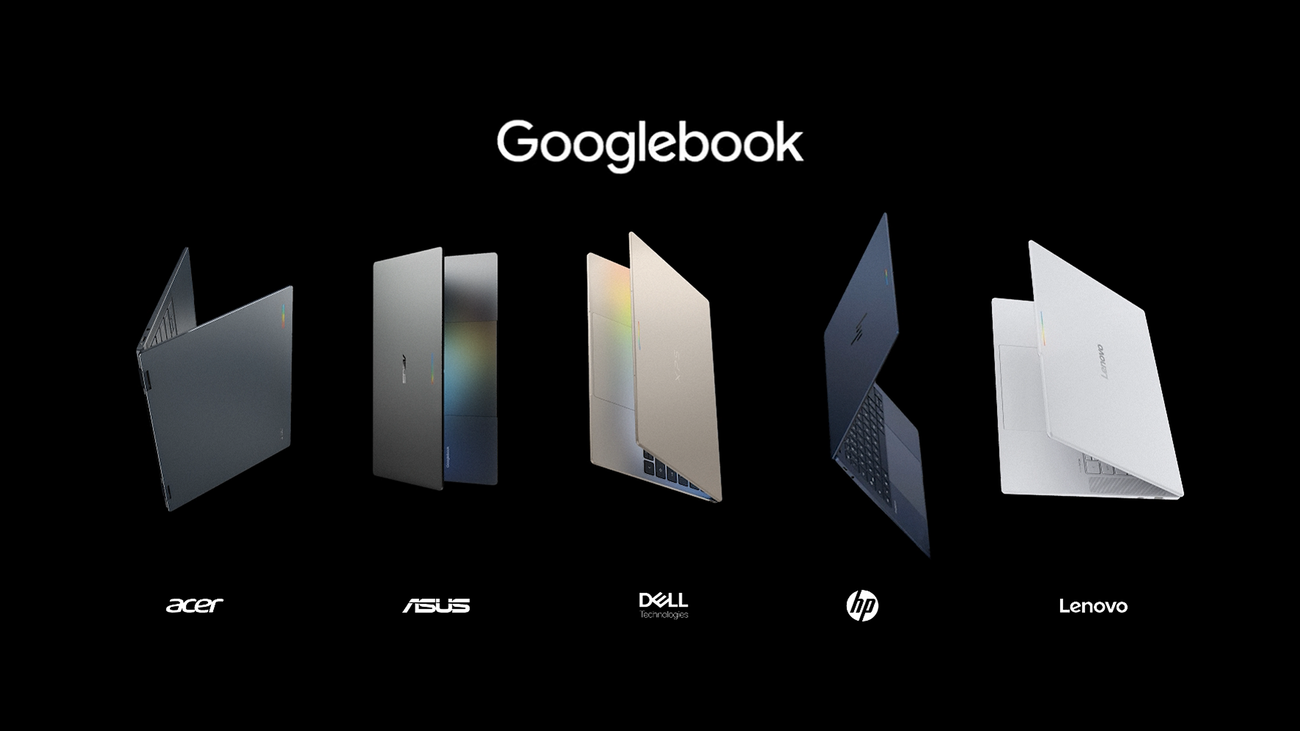
The first wave comes from five of the biggest names in laptops, each taking a slightly different angle:
- Acer: the only convertible at launch, flipping from laptop to tablet, and the cheapest of the group at US$899
- ASUS: the featherweight, at roughly 1kg, pitched squarely at travellers
- Dell: a bolder design balancing size, weight and screen
- HP: the design-led option, built to look as good closed as open
- Lenovo: the only 15-inch model, aimed at people who want a larger workspace
In the US, prices run from US$899 to around US$1,300 depending on the model. Australian pricing had not been published when pre-orders opened, so expect local figures closer to launch.
The hardware baseline
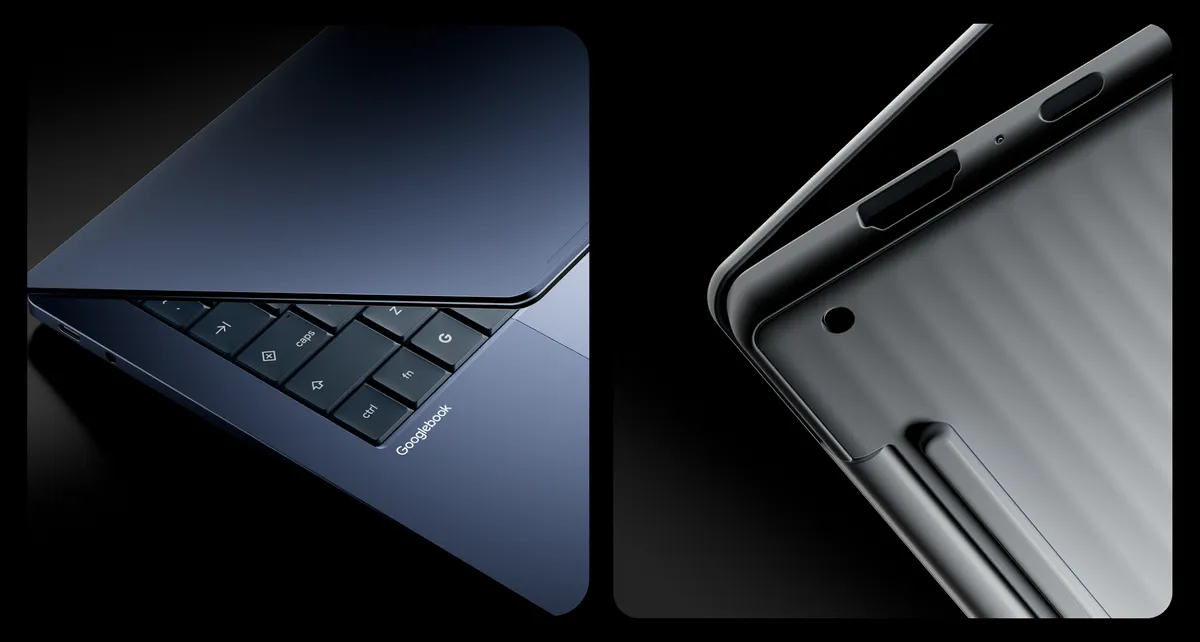
Google has set a fairly high floor across every model. All Googlebooks get touchscreens with up to 2.8K resolution, backlit keyboards, large haptic glass trackpads that click evenly wherever you press, and up to six speakers with Dolby Atmos. Every model starts with 16GB of memory, with some offering 32GB.
Buyers can choose between Intel Core Ultra Series 3 and Snapdragon X Elite processors, both paired with neural processing units rated at more than 45 TOPS for on-device AI. Google says that lets the machines run AI tasks without their fans roaring, and it quotes battery life of up to 14 hours of video or 16 hours of web browsing.
There is also a nostalgic touch: the Glowbar, a strip of light on the lid that animates on start-up, shows your battery level and lights up when you are talking to Gemini. Google is opening it up to developers so apps can create their own light patterns.
Gemini, everywhere
The real selling point is software. Googlebook is designed around what Google calls Gemini Intelligence, and several features are exclusive to the platform:
- Magic Pointer: wiggle your cursor and Gemini appears, ready to help with whatever is on screen, whether that is summarising a document or organising your calendar
- Create My Widget: describe the widget you want in plain English and Gemini builds it
- Rambler: borrowed from the Pixel 11, it turns messy voice dictation into clean, readable text by removing filler words
- Gemini Spark: lets you close the lid while Gemini keeps working on longer tasks in the background
Gemini Live and proactive suggestions based on what is on your screen are also built in.
Made for Android phone owners
If you carry an Android phone, Googlebook is designed to feel like an extension of it. When you sign in, your phone's settings, saved passwords, Wi-Fi networks and messages carry across. The Files app can open photos and documents stored on your phone, Cast My Apps runs phone apps in a window on the laptop, and Continue On reopens whatever you were doing on your phone. It is Google's clearest answer yet to the way Apple's Mac and iPhone work together.
The extras
Every Googlebook comes with 12 months of Google AI Pro, which includes 5TB of cloud storage and higher Gemini usage limits, plus three months each of YouTube Premium and Adobe Photoshop. Google is also promising regular feature drops and software updates for up to 10 years, which is a meaningful commitment for a premium laptop.
What we don't know yet
A few important questions remain. Local pricing is the big one: Googlebooks sit in MacBook Air territory in the US, and exchange rates plus GST will decide how competitive they are here. Independent performance and battery testing is also still to come, so Google's claims about quiet, efficient AI processing have not yet been put through their paces. And early coverage has flagged some inconsistencies between Google's own price listings for certain configurations, so check the exact spec before you buy.
Who should be paying attention?
Googlebook makes the most sense if you already live in Google's world: an Android phone, Gmail, Google Drive and Docs. For that buyer, the phone integration and Gemini features could be genuinely useful rather than gimmicky. If you rely on Windows-only software, or you are happily settled with an iPhone and Mac, the case is weaker. Either way, this is the most serious attempt Google has made at a premium laptop platform, and it is worth watching closely once reviews land.
Key details
- Brands: Acer, ASUS, Dell, HP, Lenovo
- US pricing: from US$899
- Australian pricing: to be confirmed
- Australian availability: 5 October 2026
- Included: 12 months Google AI Pro, three months YouTube Premium and Adobe Photoshop
- Updates: up to 10 years